Session 1 · TRACE: Relationships
Everyone with a stake
- 10 minDemocratic values: in a talking circle, discuss fairness, equality, the rule of law, freedom to speak and government by consent. Why should a council listen to people who didn't vote for it?
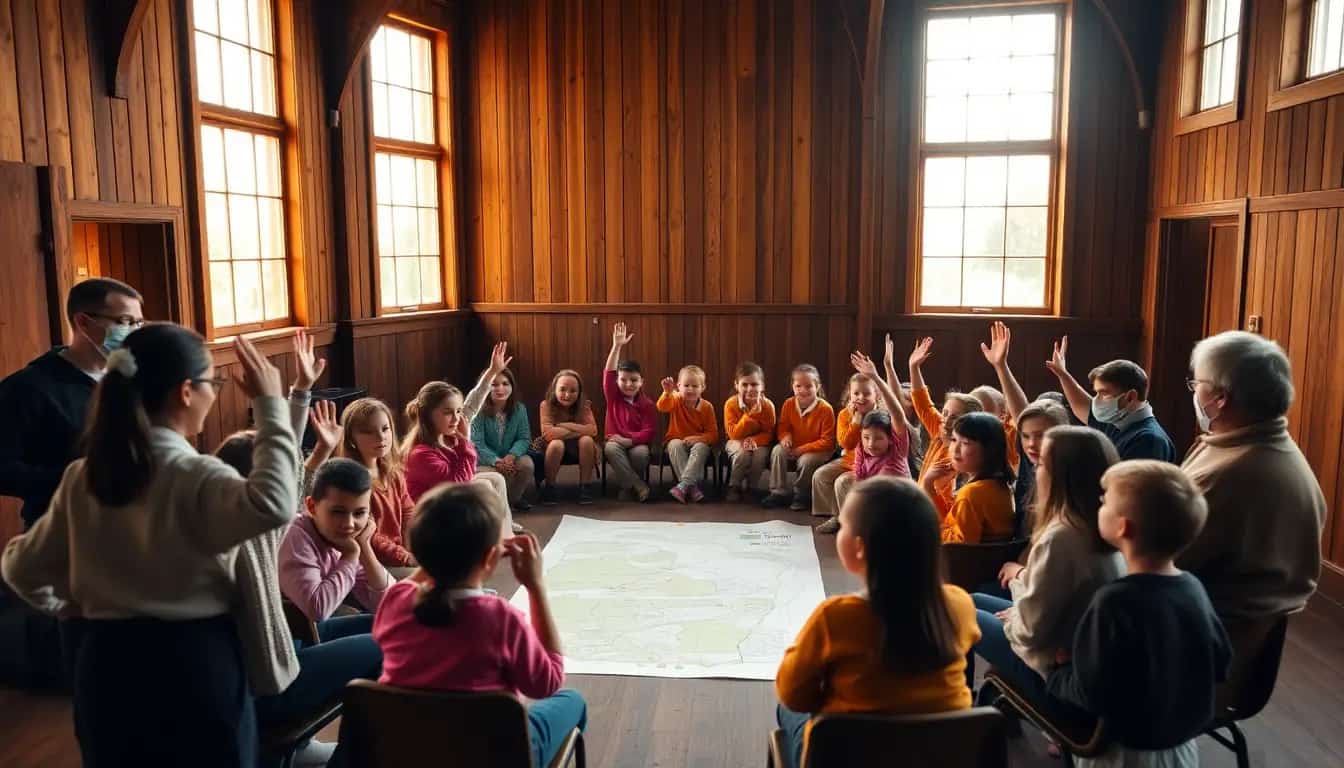
- 20 minStakeholder map: for our live decision, map everyone affected: residents, young people, businesses, iwi and hapū, ratepayers, community groups. Who has power? Who is often left out?
- 15 minWays to be heard: sort real examples of submissions, petitions, hui, campaigns, letters to councillors, voting in local elections and peaceful protest. Which ones can someone your age use?
- 5 minKārearea asks one question: 'Whose voice is missing from your map, and how could you hear it?'
Session 2 · TRACE: Relationships
Pooling and sharing
- 10 minPapakāinga: read how whānau pool land and resources to build homes around a marae. Why might a group decide to manage money together rather than alone?
- 20 minPooling game: each group gets a small number of tokens. Alone, nobody can afford the 'community project'. Decide whether to pool, how to share the benefit fairly, and what rules you need.
- 15 minGroups that make money decisions: whānau, clubs, businesses, trusts, co-ops and councils. What shared values guide each one? Compare a business that aims for profit with a trust that aims to look after its people.
- 5 minAdd your group's pooling rules to the class wall.
Getting started
Use the stakeholder map template with six faces already drawn and a word bank of who they might be.
Stretch
Find out whether your council has Māori wards or a Māori advisory board, and how iwi are involved in its decisions.
Checkpoint
Each group has a stakeholder map for the live decision and can name three ways people can influence it.
Activities for this week
- Pooling game: Why do groups sometimes manage money together?
Useful this week
- Make a submission ↗ A clear guide to writing a submission, useful for councils too.
- Māori housing: new housing schemes and papakāinga ↗ How whānau and iwi have pooled land and resources to build papakāinga.
- Sorted in Schools resources ↗ Free New Zealand money-education lessons and tools.