Session 1 · AUTHOR: Hear Voices
Talk to an expert
- 10 minPlan interview questions: open questions that invite stories, not yes or no.
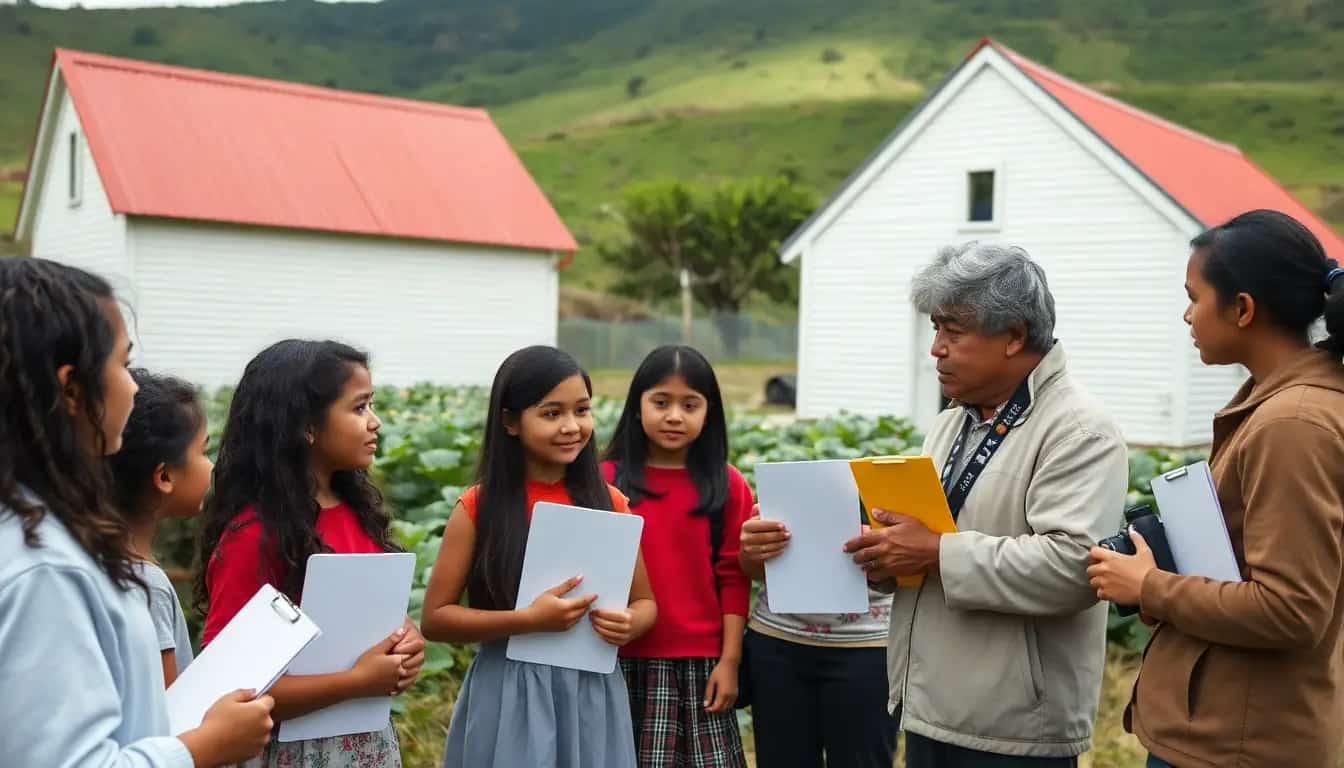
- 25 minInterviews: in pairs, interview a visiting expert, kaumātua, local historian, ranger, librarian or family member (in person, by phone or video with an adult present).
- 10 minPick your best quote and check you've written it down exactly. Note who said it and when.
- 5 minKuaka asks you one question: how do you know your most surprising fact is true?
Session 2 · AUTHOR: Organise
Plan and draft
- 10 minStructure planner: lead, 'why it matters' paragraph, headed sections, visual, conclusion, references.
- 30 minDraft your article. Start each paragraph with a clear topic sentence and use at least three transitions.
- 10 minReread one section aloud. Does each paragraph answer one sub-question?
Getting started
Use the paragraph frame: topic sentence, fact, example or quote, what it means.
Stretch
Add a sidebar or fact box with a short 'myth or fact' that adds interest.
Checkpoint
Each student has a full draft with headings, at least one quote or example, and a planned visual.
Activities for this week
- Interview an expert: What can a real person tell us that a book or website can't?
- Fact to feature: How do we turn a list of facts into writing people enjoy?
Useful this week
- NZ History ↗ Trusted New Zealand history articles, images and timelines.
- Te Ara Encyclopedia of New Zealand ↗ In-depth, reliable entries on New Zealand places, people, nature and history.
- DigitalNZ ↗ Search millions of New Zealand photos, newspapers and records at once.
- Digital content: finding, evaluating, using and creating it ↗ Guidance on finding and checking information and using it responsibly.