Session 1 · DESIGN: Discover
Systems all around us
- 10 minHook: the vinegar story. A system that worked for 14 months failed in a week. What do you think went wrong?
- 15 minSystems spotting: draw a toaster, a school and a stream as input → process → output. Where are the loops?
- 15 minMeet the aquaponics loop: fish, water, bacteria, plants. Draw it as a circle and label what moves between each part.
- 10 minFeedback: which signs tell you a system is in trouble? (fish gasping, cloudy water, yellow leaves).
Session 2 · DESIGN: Explore
Testing water
- 10 minSafety briefing for test kits: gloves, goggles, follow the steps exactly.
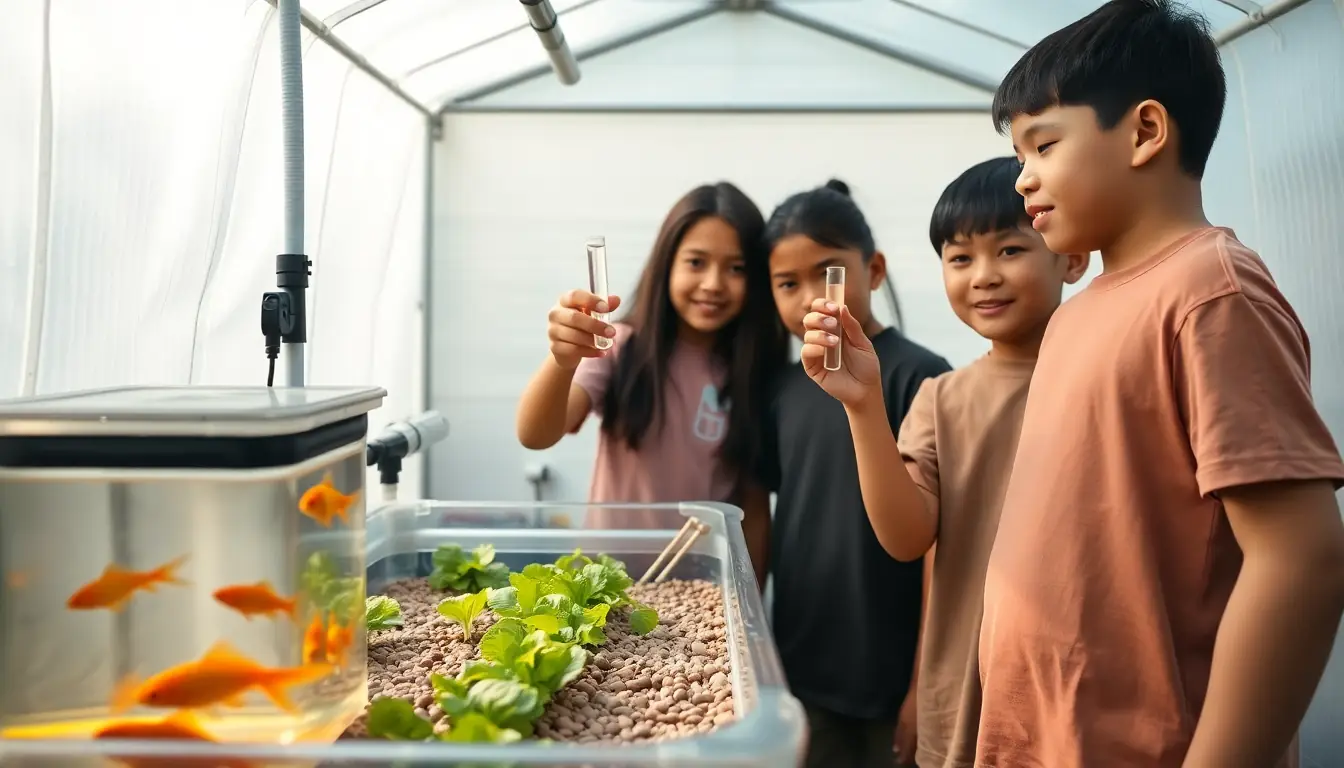
- 25 minTest tap water, rainwater and pond or aquarium water for temperature, pH, ammonia and nitrate.
- 10 minPut the class results in a table. Which water would you trust for fish? For plants?
- 5 minExit: one new word and what it means (pH, ammonia, nitrate).
Getting started
Start with temperature and pH only; add ammonia and nitrate tests when you're confident.
Stretch
Draw your own home as a system of flows: water, energy, food and waste.
Checkpoint
A system diagram with inputs, processes, outputs and a feedback loop, and your first water-test results.
Activities for this week
- Input, process, output: What goes in, what happens inside and what comes out?
- Water detectives: Which water is safe for fish, and which for plants?
Useful this week
- Systems thinking ↗ What it means to think about the whole system, not just the parts.
- Kiwi Kai virtual farm ↗ Make food-growing decisions and see their effects on nature and people.
- The nitrogen cycle ↗ How nitrogen moves between living things, soil, water and air.
- Water quality monitoring ↗ What scientists measure to judge water health, and why.