Technology · World 8 of 8 · Years 7–8
Grow It: Aquaponics and Sustainable Systems
Fish feed the plants, plants clean the water, bacteria do the invisible work. Design, build and run a living system that grows kai.
Big question: How do we design a food-growing system that keeps itself in balance, and what happens when one part fails?
- You'll make
- A working model aquaponics system or wicking bed, a labelled system diagram, a water-quality and growth log with graphs, and a care guide with a 'what to do if…' troubleshooting page.
- For
- The school's garden or Enviroschools group, the caretaker who will keep it running in the holidays, and whānau at a harvest day
- Time
- 5 weeks · 2 sessions a week
Your mission
Why it matters
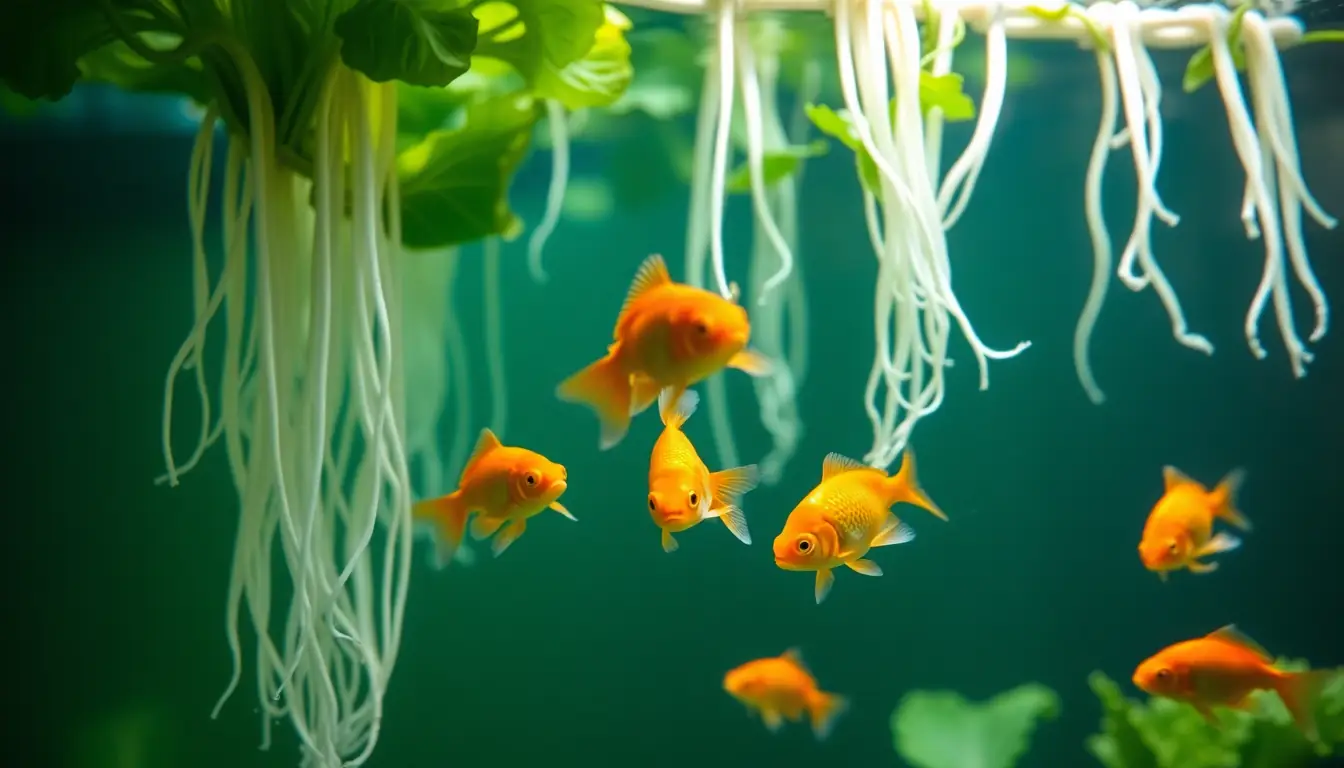
A community garden kept goldfish and lettuce in a small aquaponics system for fourteen months. Then a helpful volunteer added a splash of vinegar every day, thinking the plants liked sour water. Within a week the fish were gasping and the lettuce was turning yellow. Your class will design, build and run its own small system (an aquaponics tank or a self-watering wicking bed), keep it in balance with real data, and write the guide that stops the next helper making the same mistake.
Everything around you is a system: your body, your school, a river, the power grid. Systems thinkers look at how the parts connect and what happens when one changes. Aquaponics shows cause and effect in days instead of years, so it's one of the fastest ways to learn to think in systems and to grow food with less water and waste.
Your first step
Draw your school as a system: what goes in (water, food, power, people), what happens inside, and what comes out (waste, learning, rubbish). Then test the pH and temperature of three kinds of water: tap, rain and pond.
Make it yours
Choose a context
Same big question, three different places to explore it. Pick the one that fits your class and community.
A classroom aquaponics tank
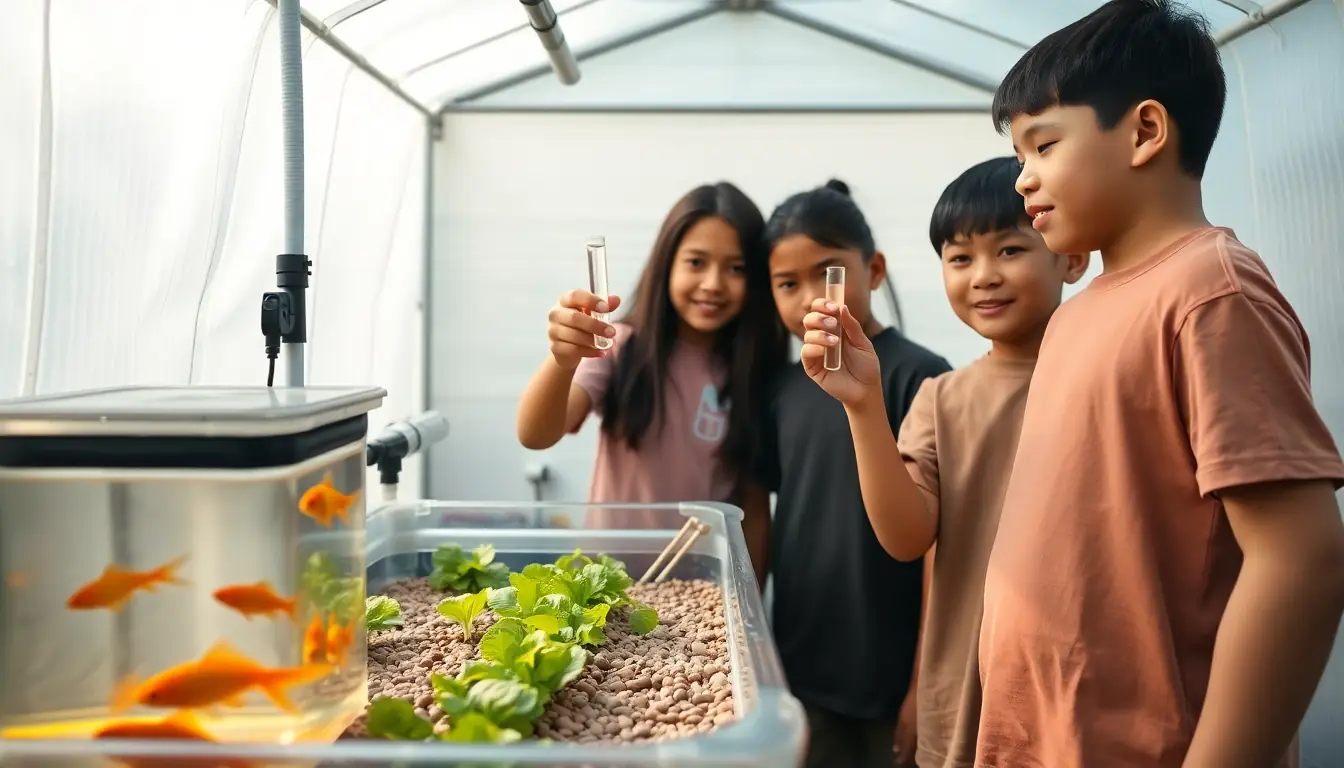
A 40 to 100 litre tank of goldfish with a small pump lifting water to a grow bed of clay balls planted with lettuce, pak choy and basil. Fast feedback, living animals to care for, and daily data to collect. Plan for weekends, holidays and power cuts.
Wicking beds in the school garden
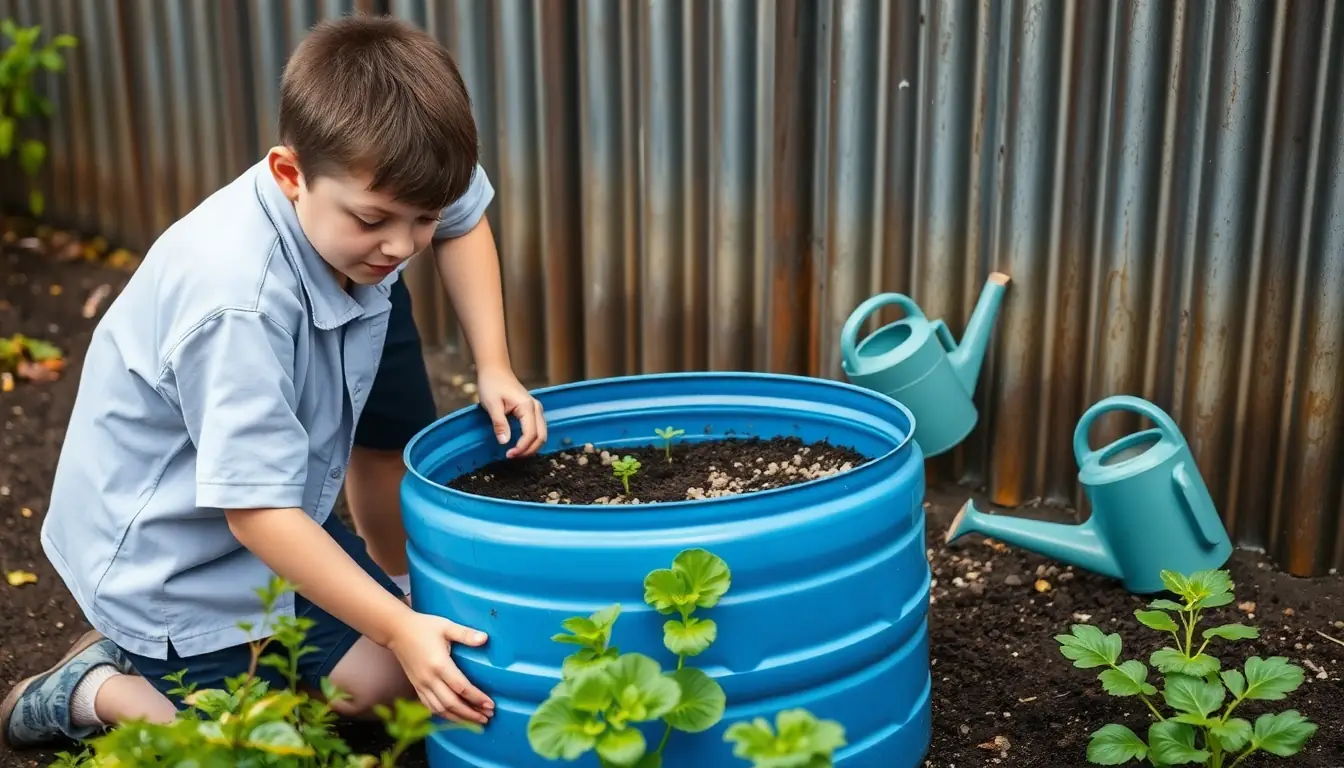
No fish, no power: a self-watering bed built from a recycled barrel, crate or IBC tank with a water reservoir under the soil. Compare water use and growth with an ordinary bed, and design for dry summers and long holidays when nobody is watering.
An eco-home or marae as a system
Trace the flows through a home, marae or community building: rain on the roof into a tank, water through the kitchen, food scraps to compost, sun through north-facing windows. Design one change that closes a loop, like greywater to a garden or scraps to a worm farm.
DESIGN
Week by week
Two sessions a week, each with Getting started and Stretch support so the whole class works together.
- W1Everything is a systemDiscover: Systems all around us · Explore: Testing water
- W2How the living engine works, and choosing a designExplore: Nitrogen cycle and system types · Sketch: System diagram and plan
- W3Build it and start the logSketch: Build day · Improve: Day one data
- W4Read the data and keep it in balanceImprove: Troubleshooting with evidence · Give Value: Is it worth it?
- W5Plan for power cuts, holidays and the long termNavigate Constraints: What could go wrong? · Navigate Constraints: Care guide and hand-over
Hands-on
Activities
Investigations and projects that fit the weeks above. Open one to see what you need and how you'll know it worked.
Input, process, outputWhat goes in, what happens inside and what comes out?Open
You need: A3 paper · coloured pens · three everyday systems: a toaster, the school canteen, a stream
- Draw three boxes in a row: input, process, output.
- For a toaster: bread and electricity in, heating out, toast and heat out.
- Do the same for the canteen and a stream.
- Draw a feedback arrow from output back to input where one exists (a thermostat, a customer complaint, rain).
- Circle any subsystem: a smaller system inside the big one.
How you'll know: You can draw any system as input → process → output and point out its feedback loop.
Go further: Draw your own body as a system. What are the inputs, outputs and feedback loops?
Fits week 1 →Water detectivesWhich water is safe for fish, and which for plants?Open
You need: aquarium test kit or strips (pH, ammonia, nitrite, nitrate) · thermometer · clean cups of tap, rain and pond or tank water · gloves and goggles
- Label each cup and measure the temperature.
- Follow the test-kit steps exactly for pH, ammonia and nitrate.
- Match the colours on the chart in good light and record the numbers.
- Compare with safe ranges: pH around 6.8 to 7.2 in aquaponics, ammonia and nitrite as close to zero as possible.
How you'll know: Your table shows each water sample's results and you can say which is safest for fish.
Safety: Gloves and goggles; don't taste, smell closely or pour test chemicals down your hands; wash hands afterwards; teacher disposes of test liquids.
Go further: Test the same water at the same time each day for a week and look for patterns.
Fits week 1 →Nitrogen cycle role-playHow does fish waste become plant food?Open
You need: role cards: fish, ammonia, bacteria A, nitrite, bacteria B, nitrate, plant · coloured bibs or string · open space
- Fish 'breathe out' ammonia: hand an ammonia card to the next person.
- Bacteria A swap ammonia for nitrite; bacteria B swap nitrite for nitrate.
- Plants collect nitrate and 'grow' (step forward).
- Now remove bacteria B. What piles up? What happens to the fish?
- Try again with too many fish, or too few plants.
How you'll know: You can explain why bacteria are the most important living thing in the system, even though you can't see them.
Go further: Draw the cycle as a diagram with arrows and explain where it could break.
Fits week 2 →Build a wicking bedCan a garden bed water itself for a week?Open
You need: a recycled food-grade barrel, crate or large tub · plastic liner if needed · a length of slotted drainage pipe and a vertical fill pipe · gravel or scoria · weed mat or shade cloth · compost-rich soil · seedlings
- Drill an overflow hole in the side about 25 to 30 cm up from the base (adult).
- Lay the slotted pipe along the bottom and connect the vertical fill pipe so it sticks up above the soil.
- Fill with gravel up to the overflow hole: this is the water reservoir.
- Cover with weed mat, then fill with soil and plant seedlings.
- Fill through the pipe until water runs out of the overflow. Record how much water it took.
How you'll know: The reservoir fills from the bottom and the soil stays damp without top watering.
Safety: Adults drill and cut; gloves for gravel; check the barrel only held food-safe contents; lift heavy bags in pairs.
Go further: Record how many days until you need to refill, and compare with a normal pot.
Fits week 3 →Model aquaponics buildCan fish and plants look after each other in a small space?Open
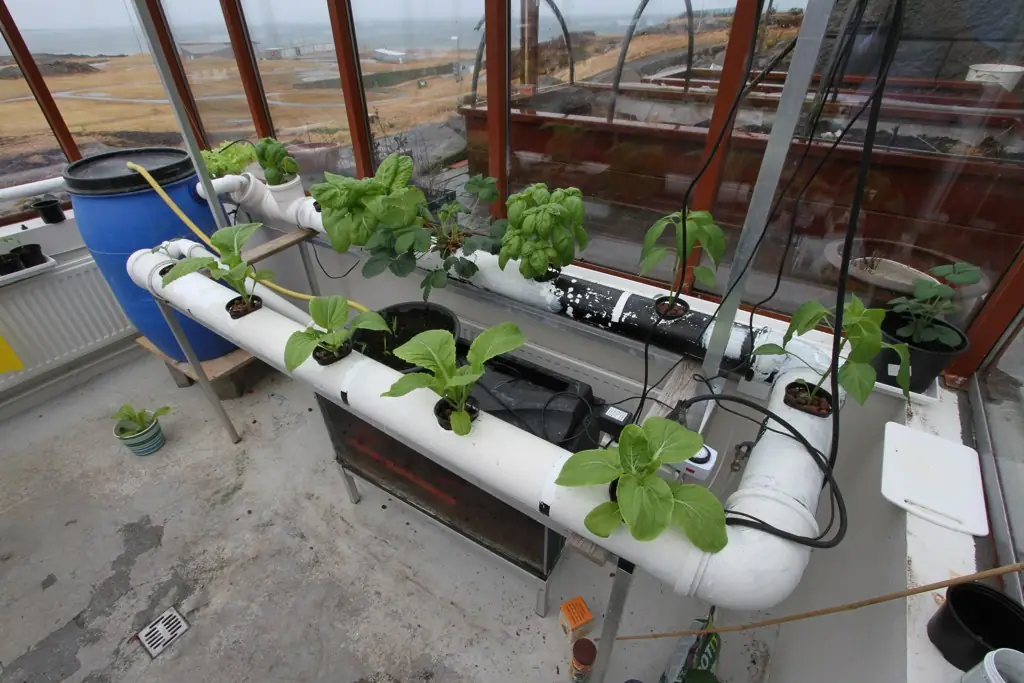
You need: tank of 40 to 100 litres with established bacteria · small submersible pump and tubing · grow bed or tray with drain holes · rinsed expanded clay balls · lettuce, pak choy or basil seedlings · RCD-protected power outlet · goldfish (added by the teacher when the system is cycled)
- Set the tank on a strong, level bench; water is heavy (1 litre weighs 1 kg).
- Rinse the clay balls until the water runs clear, then fill the grow bed.
- Place the grow bed over the tank so it drains back into it.
- Fit the pump and tubing; an adult makes drip loops in the cable and plugs it in.
- Plant seedlings, wash their roots gently and record their height.
How you'll know: Water flows from tank to grow bed and back without leaks, and every subsystem is labelled on your diagram.
Safety: Only adults handle plugs and pumps; hands out of the water while the pump is on; mop spills immediately; follow the class animal-care plan.
Go further: Time the fill and drain cycle and work out how many times a day all the tank water passes through the plants.
Fits week 3 →The system logWhat does a week of data tell us about the balance of our system?Open
You need: shared spreadsheet · test kit · thermometer · ruler
- Every school day, record temperature, pH, water added, feed given, plant height and fish behaviour.
- Twice a week, add ammonia, nitrite and nitrate.
- Make line graphs with the date along the bottom.
- Mark anything unusual (cold night, extra feeding, power cut) on the graph.
How you'll know: You can point to a change on your graph and explain what caused it.
Go further: Add a micro:bit to log water temperature every hour and compare day and night.
Fits week 4 →Water use face-offDoes our system really use less water than a normal garden?Open
You need: your system or wicking bed · an ordinary pot or bed with the same plants (control) · measuring jug · log sheet
- Record every litre added to each system for two weeks.
- Water the control pot only when the top 2 cm of soil is dry.
- Measure the tallest leaf of each plant at the start and end.
- Work out litres used per centimetre of growth for each system.
How you'll know: You have a fair comparison of water use and growth, with the same plants and the same light.
Go further: Scale it up: how much water could the school garden save over a summer?
Fits week 4 →Power cut drillWhat happens to our system when something fails, and how do we protect it?Open
You need: scenario cards (power cut, holiday, heat wave, overfeeding, a helper adds vinegar) · system diagram · timer
- Draw a card. Predict what happens in the first hour, first day and first week.
- Trace the effect around your system diagram: which subsystem fails first?
- Design a response and a prevention for each scenario.
- Add the best ones to the care guide's 'what to do if…' page.
How you'll know: Every risk in your care guide has a warning sign, a response and a prevention.
Go further: Work out the pump's yearly energy use and cost, then design a version that needs no power.
Fits week 5 →Look closer
From the real world
Background reading
Read to understand
Short readings written for Kōkiri Learn students, with their sources.
- Thinking in systems: loops, feedback and surprisesWhat a system is, how inputs, processes, outputs and feedback loops work, and why small changes can cause big surprises.
- The invisible workers: how fish waste becomes plant foodThe nitrogen cycle inside an aquaponics system, the bacteria that power it, and the water tests that let you see what you can't see.
- Goldfish, lettuce and the law: growing sustainably in AotearoaWhich fish you can legally keep, why New Zealand systems are plant-first, how temperature and power cuts shape design, and how wicking beds and eco-homes close loops too.
Trusted NZ sites
Explore more
Placed at the stage of the journey where each one helps.
Discover
Systems thinking ↗Science Learning Hub
What it means to think about the whole system, not just the parts.
Discover
Kiwi Kai virtual farm ↗Science Learning Hub
Make food-growing decisions and see their effects on nature and people.
Explore
The nitrogen cycle ↗Science Learning Hub
How nitrogen moves between living things, soil, water and air.
Explore
Water quality monitoring ↗Science Learning Hub
What scientists measure to judge water health, and why.
Sketch
How to make wicking garden beds ↗Mr Fothergill's Seeds NZ
Step-by-step build ideas for a self-watering bed.
Improve
Microsoft MakeCode for micro:bit ↗Microsoft
Program a micro:bit to log water temperature.
Give Value
Enviroschools ↗Toimata Foundation
How NZ schools run sustainability projects that last.
Navigate Constraints
Koi carp ↗Department of Conservation
Why some fish are banned in New Zealand and must never be released.
Navigate Constraints
EECA ↗Energy Efficiency and Conservation Authority
Energy use, efficiency and solar power for your system.
Real audiences
- The school garden or Enviroschools group who will keep the system running
- The caretaker and the families who look after it in the holidays
- Whānau and the local community garden at a harvest day
Work with other schools
- Share daily water-quality data in one spreadsheet with a partner school and compare how temperature in different regions changes the nitrogen cycle.
- Run the water-use face-off in several schools at once, each with a different system, and combine the results.
- Swap care guides with another school and test whether a stranger can follow yours.
- Hold a video tour where each class shows its system and one problem it solved.
Stretch challenges
- Add a solar panel and battery to run the pump, and calculate how big it needs to be.
- Grow microgreens in the system and measure how fast they turn nitrate into food.
- Design a greywater or rainwater loop for a home or marae garden and present it to whānau.
- Compare aquaponics, a wicking bed and a soil garden on cost, water, energy, food and effort, and recommend one for your school.
New Zealand Curriculum
What this world covers
Mapped to the refreshed Phase 3 statements. The whole class covers both the Year 7 and Year 8 sequences over two years.
Technology · Systems and control
System diagrams, subsystems and input–process–output for a living food system
Year 8 sequence
Technology · Systems and control
Systems respond to inputs through feedback and control loops; building and testing a simple system
Year 7 sequence
Technology · Design and innovation
Design life cycle and environmental impact: materials, energy, maintenance and end of life
Year 8 sequence
Science · Biological Science
Food chains, energy transfer and human impact on ecosystems; bacteria as decomposers
Year 7 sequence
Mathematics and Statistics · Statistics
Time-series graphs of water quality and plant growth
Year 8 sequence
Technology · Digital technologies
Collecting and graphing system data in a spreadsheet to find patterns
Year 8 sequence
For teachers: how to run it
Prep: an aquaponics system needs four to eight weeks for bacteria to establish (cycling) before fish go in at full stocking, so either start the tank a month before the world, seed the grow bed with filter media from an established aquarium, or run a wicking-bed build first and add the tank later. Animals: goldfish are the practical legal choice in New Zealand. Tilapia are noxious, trout are sports fish that can't be farmed or sold, and koi carp and gambusia are unwanted organisms; never buy them, and never release any aquarium fish or plants into streams or ponds. Write an animal-care roster (daily feeding and checks, weekend and holiday cover, who to call) and follow your school's policy on animals in classrooms. Electrical safety: pumps and heaters on an RCD-protected outlet, drip loops on every cable, cords off the floor and away from water, only adults plug in or unplug; students keep hands out of the water while anything is switched on. Water-test kits: use aquarium test kits with gloves and goggles, no mouth pipetting, and follow the kit instructions for disposal. Garden builds: gloves, check recycled barrels held only food-safe contents, and adult use of any cutting tools. Kaitiakitanga: invite local mana whenua or the school's iwi partners to share how they see water, kai and whakapapa connecting living things; do not present these ideas on their behalf. Differentiation: pairs run the daily log with a picture checklist; extension groups calculate pump energy use and cost, graph ammonia against nitrate over time, or add a micro:bit temperature logger. Pūkeko, the AI companion, asks one question when the data changes; it never tells students what is wrong with the system. Kōkiri Lab links: the Robotics and Systems world (sensors, input–process–output) and the garden and water worlds.
Plan this world into any term with the two-year planner. Students can record their thinking in their Kōkiri Learn portfolio.
More Technology worlds






Ready to run it with your class?
Free trial for NZ schools. One combined Years 7–8 class, any term.