Session 1 · SOLVE: Link Ideas
Volume and litres
- 10 minVolume is space in three dimensions, in cubic units. Build a 3 × 2 × 2 prism from cubes: V = l × w × h = 12 cubic units.
- 15 minMake the link: a 10 cm cube holds 1000 cm³ = 1 litre. A 1 m cube holds 1000 litres. 1 mL = 1 cm³.
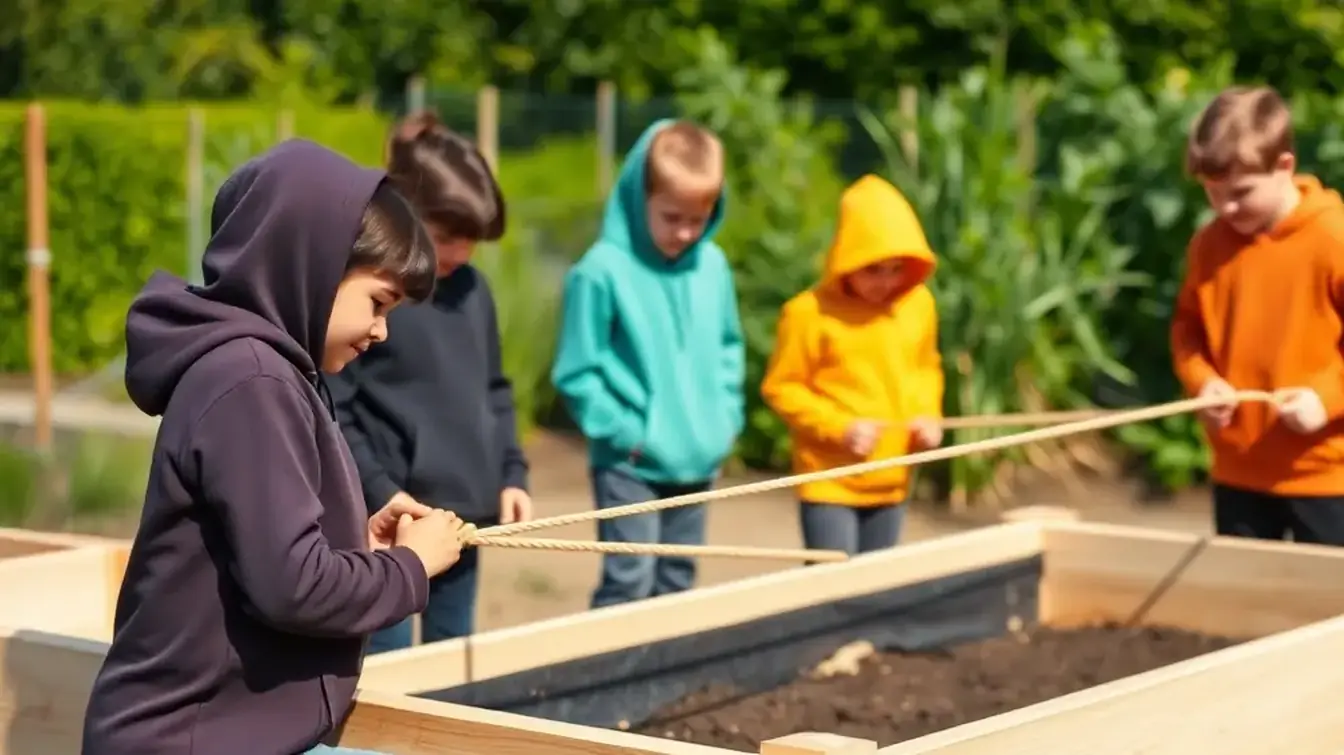
- 15 minYour design: work out the soil volume in a raised bed, the water in a tank, or the air space in the classroom, in m³ and litres.
- 10 minHow much to order: bags of 40 L soil, or bulk by the cubic metre? Round up sensibly and cost both options.
Session 2 · SOLVE: Verify
Check it for real
- 15 minBuild a 10 cm cube from a card net and fill it with rice or water from a measuring jug. Does it hold 1 litre?
- 15 minMeasure a real container (a bin, a tank, a planter box), calculate its capacity, then check by filling it with a known amount of water.
- 15 minExplain any difference between calculated and measured volume: wall thickness, sloping sides, measuring errors.
- 5 minRecord your corrections and what you learned about measuring inside versus outside.
Getting started
Work in centimetres for small containers and metres for beds and tanks. Convert before you multiply.
Stretch
A wedge-shaped bed or an A-frame cloche is a triangular prism: V = ½ × b × h × l. Find its volume and compare with a rectangular bed of the same footprint.
Checkpoint
Correct volumes in cubic metres and litres, a sensible order quantity, and one real-world check.
Activities for this week
- How much soil?: How many bags of soil does our raised bed need, and is it cheaper to buy in bulk?
- The litre lab: Is a litre really a 10 cm cube?
- Tank and roof maths: How much water does a tank hold, and how much rain does our roof catch?
Useful this week
- Area ↗ Area formulas for rectangles, triangles, trapeziums and more.
- Metric volume ↗ Millilitres, litres, cubic centimetres and cubic metres, and how they connect.
- Polyhedron models and nets ↗ Printable nets to fold into 3D shapes.
- Water supply ↗ NZ guidance on collecting and storing rainwater, to check your tank design.