Session 1 · VOICE: Validate the Problem
Three requests
- 10 minHook: switch off every light and device in the room. What stopped? What still works, and why? List every electrical thing you used before school today.
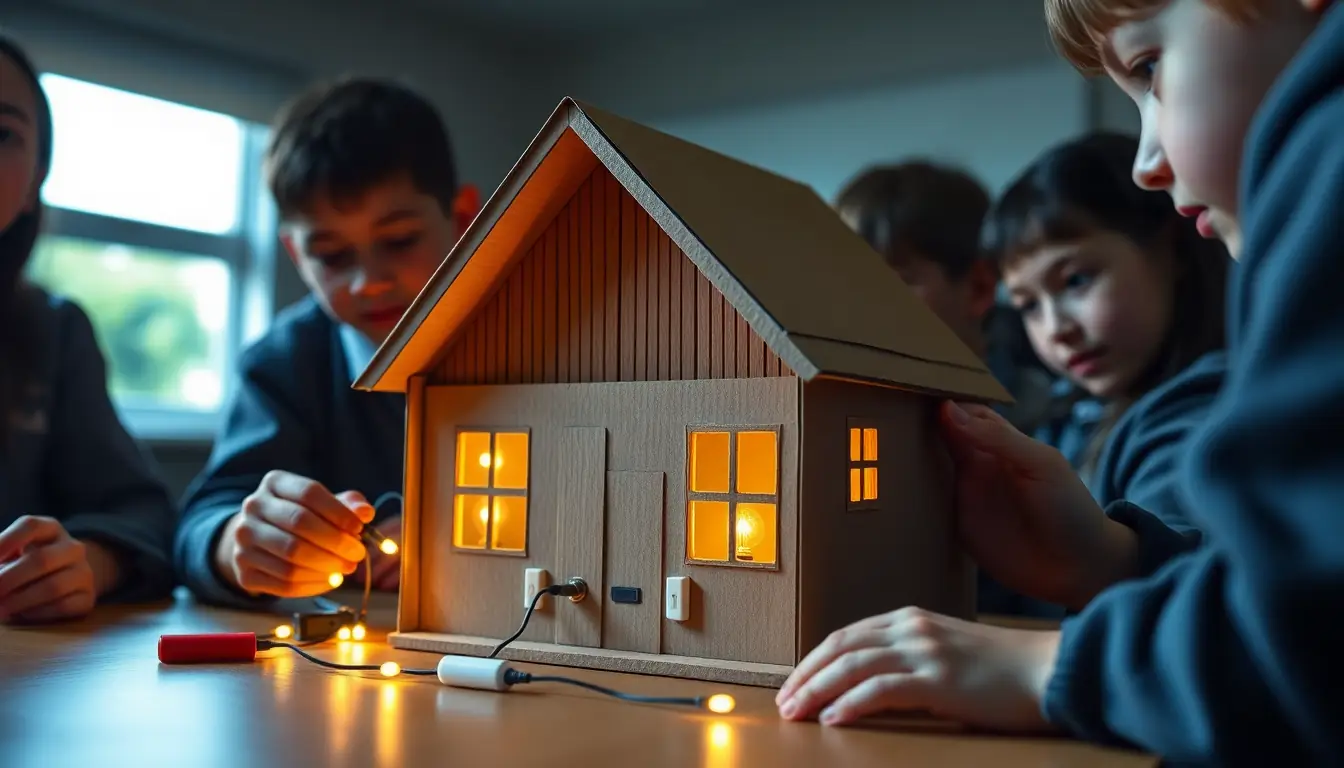
- 15 minRead the three requests: the model whare, the tramping torch, the energy audit. In groups, list what you would need to know to solve each one.
- 15 minSort the questions into: we can test it, we can measure it, we need to look it up. Choose a context for your group.
- 10 minSafety charter: write the class's electricity rules together and sign them.
Session 2 · VOICE: Observe
Static stations
- 30 minRotate: balloon and tissue; balloon near a thin stream of tap water; two charged balloons hung side by side; a charged comb near a ping-pong ball; the jar electroscope.
- 10 minRecord only observations: what moved, which way, how far, for how long.
- 10 minIntroduce the idea: rubbing moves tiny negative particles called electrons. Like charges push apart; unlike charges pull together. Match each station to the idea.
Getting started
Use the station cards with a picture of what to set up and a box for 'I saw…'.
Stretch
Find out why static shocks happen more on dry days and when you walk on carpet in socks.
Checkpoint
Everyone has signed the safety charter and can say what happens when two like charges meet.
Activities for this week
- Static stations: What can a charged balloon do?
- Jar electroscope: Can you detect an invisible charge?
Useful this week
- Energy-saving information for homes ↗ Where NZ homes use the most electricity and simple ways to save it.
- Static electricity and electrical charge ↗ How rubbing moves electrons and makes objects attract or repel.
- Balloons and Static Electricity ↗ See the charges move when you rub a balloon on a jersey.