Session 1 · VOICE: Investigate
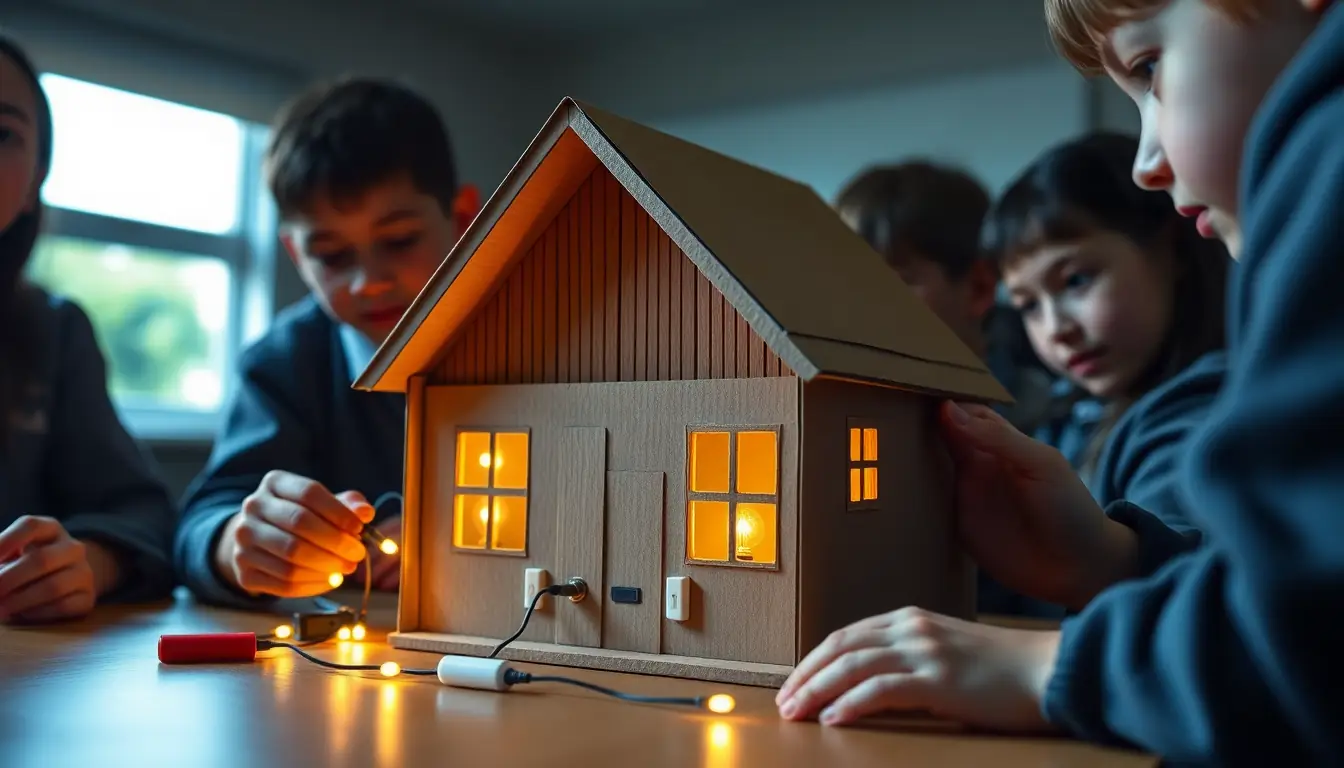
Design and build
- 10 minDraw the circuit diagram for your product first: whare lights, torch or audit model. Label every part and say series or parallel.
- 30 minBuild and test. If it does not work, check one connection at a time from the battery around the loop.
- 10 minEnergy audit groups: tally lights, heaters and devices on standby in two rooms, and note the watts written on each.
Session 2 · VOICE: Create Conclusions
What the evidence says
- 20 minTest your product: how bright, how long it runs, whether one fault stops everything. Record results. Audit groups calculate energy used: watts × hours.
- 20 minWrite a conclusion with claim, evidence and reasoning: why your circuit design is the right one for the job.
- 10 minMake the safety card: three rules for using your product and one rule about mains electricity.
Getting started
Use the design checklist: power source, switch, output, wiring type, one safety feature.
Stretch
Add a second switch so a light can be turned on from two places, or a light-dependent resistor that turns a light on in the dark.
Checkpoint
Every product has a correct circuit diagram and at least one test result.
Activities for this week
- Build a tramping torch: Can you design a torch that is bright, reliable and tough?
- Energy detectives: the school audit: Where is our school using, and wasting, electricity?
Useful this week
- Electricity – electrons, insulators and conductors ↗ Why metals conduct and plastics do not.
- Circuit Construction Kit: DC ↗ Build series and parallel circuits on screen and measure current and voltage.
- Communicating with symbols ↗ Draw circuit diagrams that anyone in the world can read.
- Resistors ↗ How resistance controls current in a circuit.