Session 1 · VOICE: Investigate
Two ways to wire
- 10 minPredict: if you add a second and third bulb in one loop, what happens to brightness? What if each has its own branch?
- 25 minBuild series (one loop) and parallel (branches) with 1, 2 and 3 bulbs. Rate brightness 1–5 and unscrew one bulb each time. What happens to the others?
- 15 minRecord in a table and write one sentence comparing the two.
Session 2 · VOICE: Investigate
Measure it
- 10 minRecap the meter: current is measured in amperes (A) by putting the meter in the loop; voltage in volts (V) across a part.
- 25 minMeasure the current and the voltage across each bulb in your series and parallel circuits. Add the branch currents in the parallel circuit and compare with the total.
- 15 minLook for patterns: in series the voltage is shared; in parallel each branch gets the full voltage and the currents add up.
Getting started
Use the results table with the meter setting written at the top of each column.
Stretch
Use V = I × R to work out the resistance of one bulb, then of two bulbs in series. What pattern do you notice?
Checkpoint
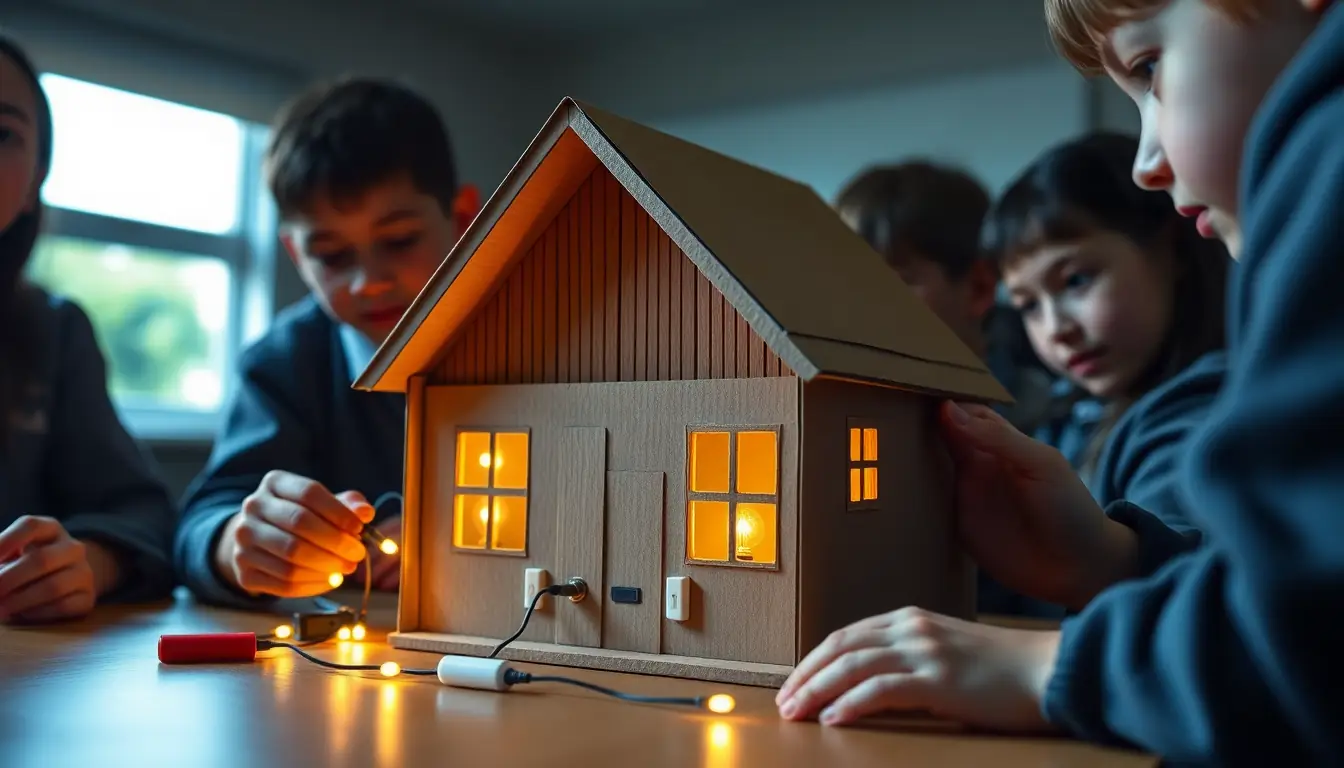
Every group can explain why house lights are wired in parallel, using their own measurements.
Activities for this week
- Series versus parallel: What happens to the other bulbs when one goes out?
Useful this week
- Electricity – electrons, insulators and conductors ↗ Why metals conduct and plastics do not.
- Circuit Construction Kit: DC ↗ Build series and parallel circuits on screen and measure current and voltage.