Session 1 · CREATE: Connect
The whole body should speak
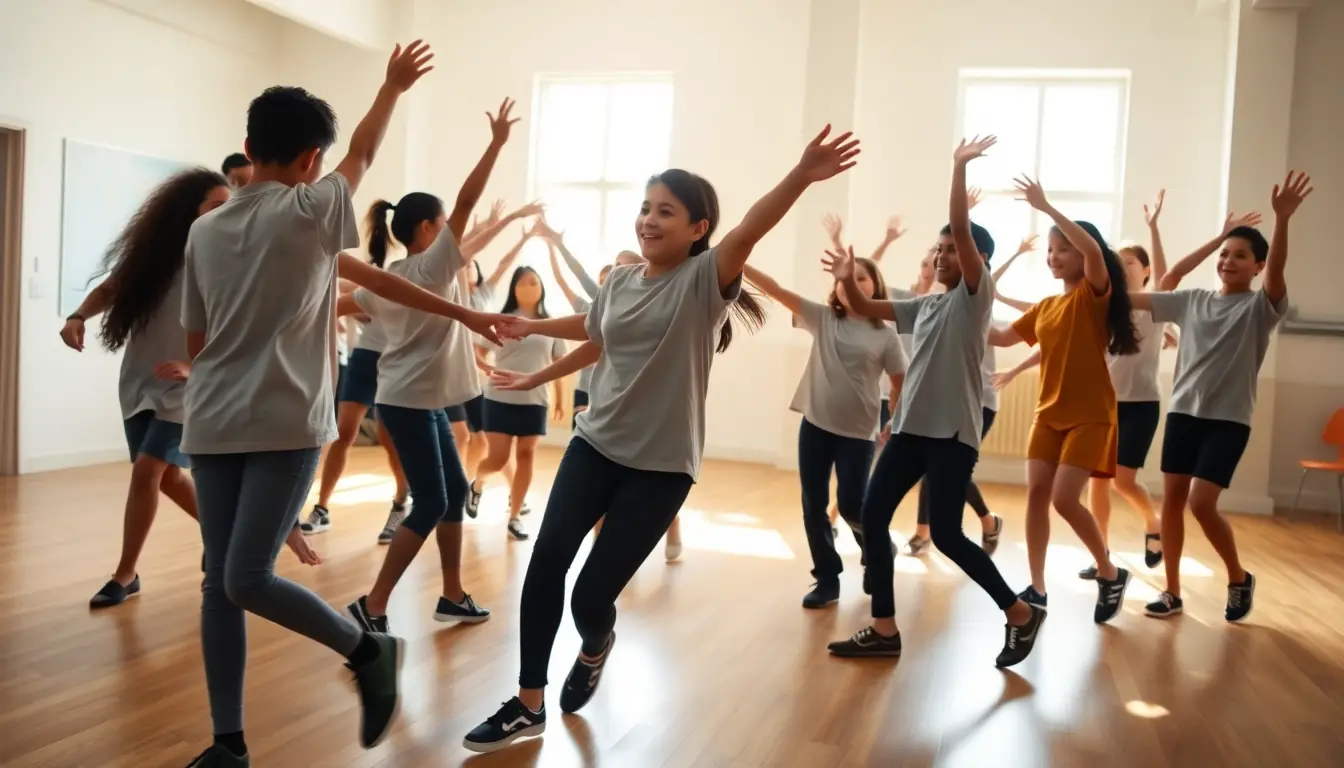
- 8 minWarm-up in a circle: follow-the-leader pulse raiser, then roll shoulders, wrists, hips, knees and ankles. Explain why dancers always warm up.
- 10 minHook: without music, the teacher (or a volunteer) shows the same short walk three ways: tired, proud, scared. What changed? Name it together: speed, size, level, energy, focus.
- 15 minElements shuffle game (see activities): move around the space and change one element each time the drum sounds (body part leading, level, pathway, speed, energy, relationship to a partner).
- 12 minIdea storm: what could our dance be about? Brainstorm under the three contexts (a place, city movement, journeys). Each student writes one idea on a sticky note and places it on the wall.
- 5 minCool-down stretch. Share one new word you learned today (level, pathway, canon, energy).
Session 2 · CREATE: Respond
Watching like a choreographer
- 10 minMini-lesson: kapa haka is a group standing in rows (kapa) to perform dance with sung or chanted words. A Te Matatini bracket has six parts: whakaeke (entrance), waiata tawhito, poi, waiata-ā-ringa (action song), haka and whakawātea (exit). Talk about ihi (presence), wehi (awe) and wana (thrill).
- 15 minWatch a recorded kapa haka bracket and a siva Sāmoa or other Pacific item. Use see–think–wonder: what do you notice about hands, feet, formations and faces? What might the movements mean? What do you wonder?
- 10 minWatch a short contemporary piece (for example Black Grace). Compare: what is the same (unison, strong formations, storytelling) and what is different?
- 10 minTalk about respect: these forms belong to peoples and carry whakapapa and meaning. We learn from them, we don't copy sacred forms. What questions would we ask a visiting tutor?
- 5 minExit card: one convention you noticed in each performance.
Getting started
Use the elements word bank (body, space, time, energy, relationships) and say one thing you notice about how a dancer moves.
Stretch
Research one convention from a dance form you haven't met before (for example, how performers invite the audience to join in during a siva Sāmoa, or how hand gestures in bharatanatyam carry meaning) and share it with the class.
Checkpoint
Everyone can name the five dance elements and one convention from a cultural dance form, and the class has a shortlist of three ideas for the dance.
Activities for this week
- Elements shuffle: How many ways can one simple walk change?
- See, think, wonder: watching cultural dance with respect: What can we learn from how kapa haka and siva Sāmoa tell stories?
Useful this week
- Kapa haka ↗ What kapa haka is, its six disciplines, and the story of Te Matatini.
- Cultural dance ↗ Pacific dance in Aotearoa, Polyfest and the Pasifika Festival.
- The Dance Collection ↗ New Zealand dance on film, from ballet to hip hop, to watch and discuss.
- Contemporary dance ↗ How Māori and Pacific choreographers shaped New Zealand contemporary dance.