Session 1 · CREATE: Experiment
Gesture to motif
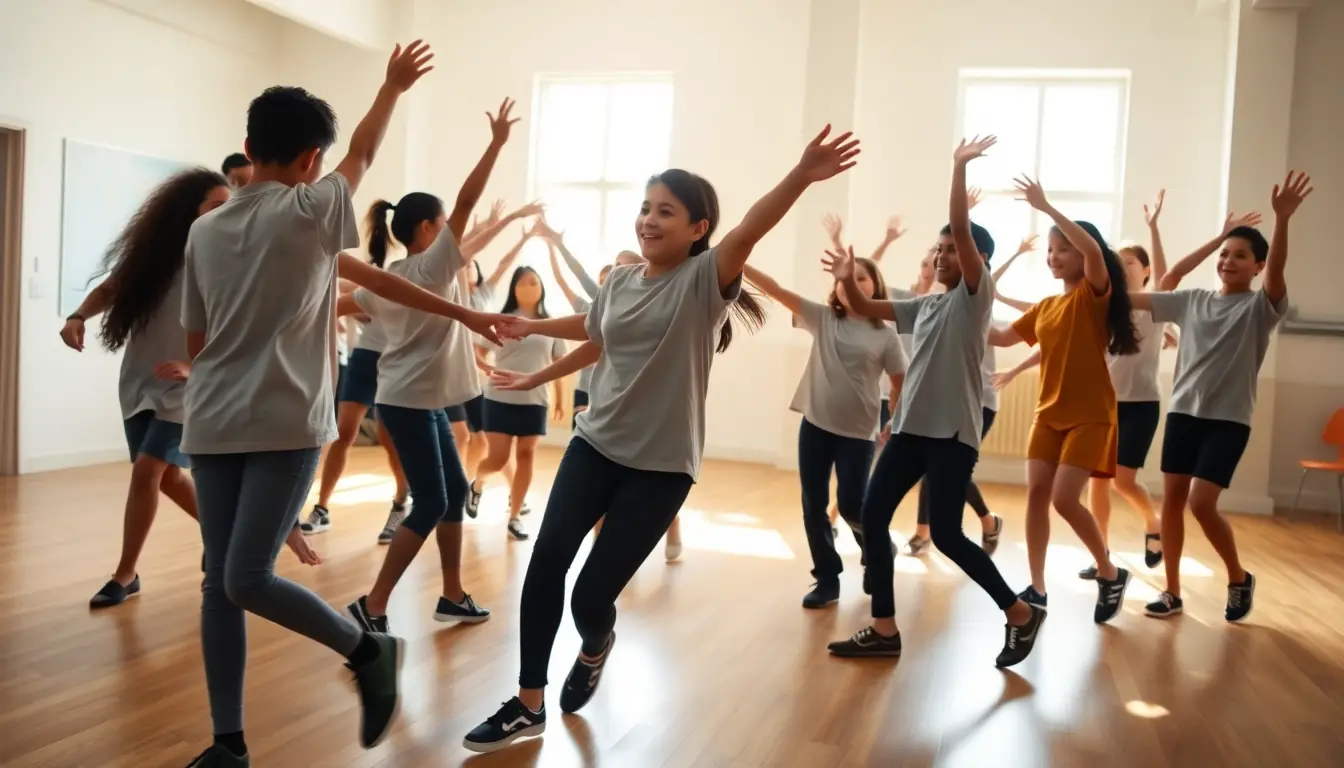
- 7 minWarm-up with a mirror game in pairs: one leads, one follows, then swap without stopping.
- 8 minVote on the class idea (or let groups choose a context). Groups of four to six form.
- 20 minGesture to motif (see activities): each dancer chooses an everyday gesture linked to the idea (wiping rain from your face, waving goodbye, pulling a rope), then transforms it by changing size, speed, level and body part until it becomes a dance motif.
- 10 minTeach your motif to your group. Each group now has four to six motifs. Film them (feet and hands framing only if faces are an issue).
- 5 minCool-down. Pīwakawaka asks one question about which motif best carries your idea; jot your answer in your score.
Session 2 · CREATE: Experiment
Levels, pathways and symbols
- 7 minWarm-up: travel through the space on straight, curved and zigzag pathways.
- 10 minMini-lesson: symbolism in dance. A slumped posture, a slow sinking movement or a reaching hand can stand for sadness, hope or loss. Brainstorm symbols for your idea.
- 20 minExplore each motif at three levels (low, middle, high) and on two pathways. Keep the versions that feel strongest.
- 10 minFloor-pattern mapping: draw your group's pathways on A3 paper, then mark them on the floor with coloured tape.
- 5 minShare one discovery with another group.
Getting started
Start from the motif bank cards (reach, fall, spin, push, gather) and change just one element at a time.
Stretch
Create a motif that can be performed by one hand only, then grow it until the whole body performs it.
Checkpoint
Each group has at least four motifs linked to its idea, filmed or drawn in the score, plus a floor pattern.
Activities for this week
- Gesture to motif: How does an everyday action become dance?
- Floor-pattern mapping: Where does each dancer travel, and why?
Useful this week
- Touch Compass ↗ New Zealand's inclusive dance company: ideas for movement every body can do.