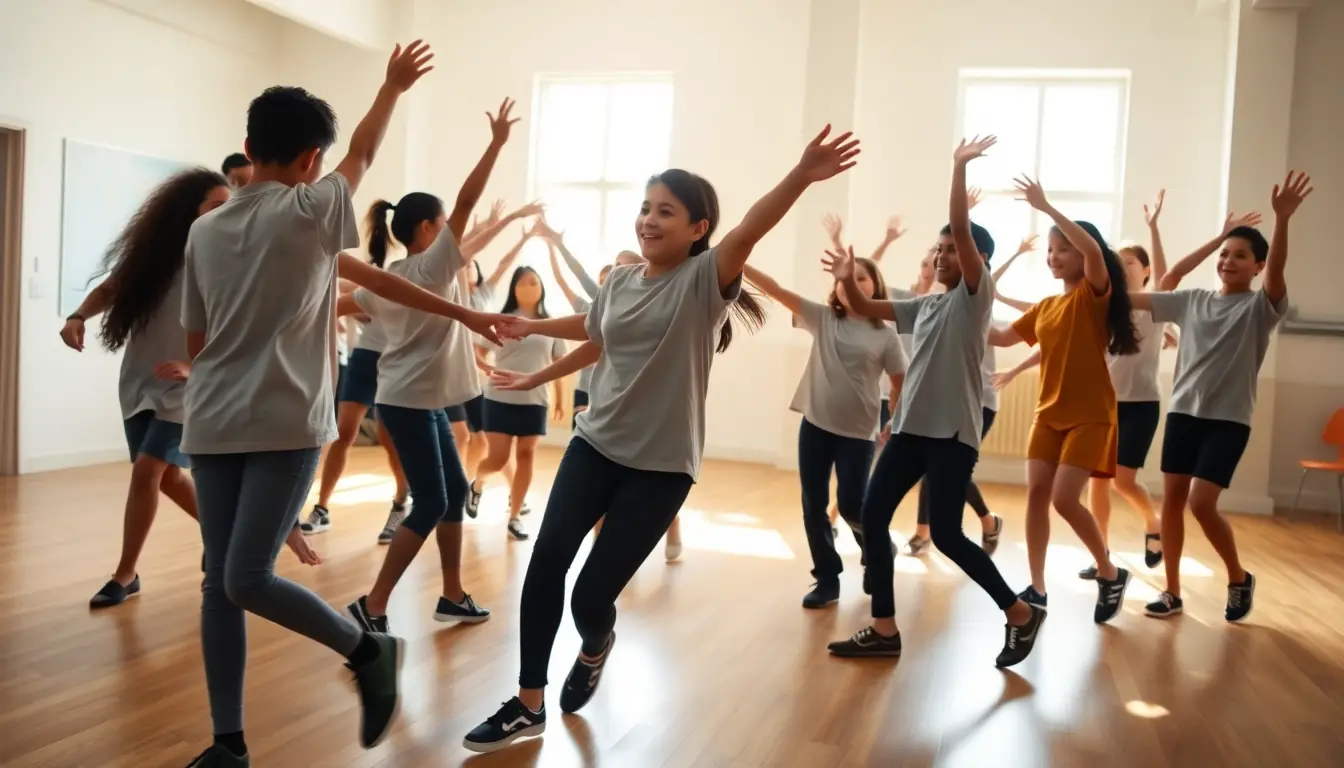
Session 1 · CREATE: Arrange
Choreographic devices
- 7 minWarm-up: canon clap. Clap a four-beat rhythm in a round, then walk it.
- 13 minMini-lesson: devices choreographers use. Unison (everyone together), canon (one after another, like a Mexican wave), mirroring, repetition, contrast (fast next to still), and formations (lines, circles, clusters).
- 25 minDevices workshop (see activities): arrange your motifs using at least two devices. Try your opening in unison and a middle section in canon.
- 5 minCool-down and quick peer check: can another group name the devices they saw?
Session 2 · CREATE: Arrange
Beginning, middle, end
- 7 minWarm-up: dancers start frozen in a shape and 'melt' to the floor on a count of eight.
- 10 minChoose or create music. Listen for tempo, beats per bar and changes in dynamics. Mark the counts on your score. (Option: compose a simple beat in Chrome Music Lab or use body percussion.)
- 25 minBuild a four-part structure: a strong opening image, a development, a climax (highest energy or biggest change), and a clear ending image. Write the order on the score.
- 8 minRun the whole piece once, even if rough. Film it for next week.
Getting started
Use the four-box structure template: Opening shape → Motifs in unison → Motifs in canon → Ending shape.
Stretch
Add a section where the group splits and two different things happen at once, then join back together.
Checkpoint
Each group can perform a rough run of the full dance with a clear opening, climax and ending, and has a written score.
Activities for this week
- Canon, unison and mirror: How do choreographers make a group of dancers look like one living thing?
- Choreographer's score: How do dancers remember and share a dance?
Useful this week
- Black Grace ↗ Neil Ieremia's company blends Pacific and contemporary dance to tell stories.