Session 1 · CREATE: Arrange
Story and storyboard
- 10 minA short story needs three parts: a character who wants something, a problem, and a change. Share a 30-second example and name the three parts.
- 15 minIn your group, write your story as three sentences, then as a list of six to ten moments.
- 20 minDraw a storyboard: one box per shot with a sketch, the shot type, what moves, any sound, and how many seconds it lasts.
- 5 minPīwakawaka asks one question about what your audience will feel at the end. Note your answer beside the storyboard.
Session 2 · CREATE: Arrange
Shots, composition and the set
- 10 minShot types: wide shot (shows the place), medium shot (shows the character), close-up (shows feelings). Why switch between them?
- 10 minComposition: use the rule of thirds and emphasis so the audience looks at the right thing. Keep the background simple.
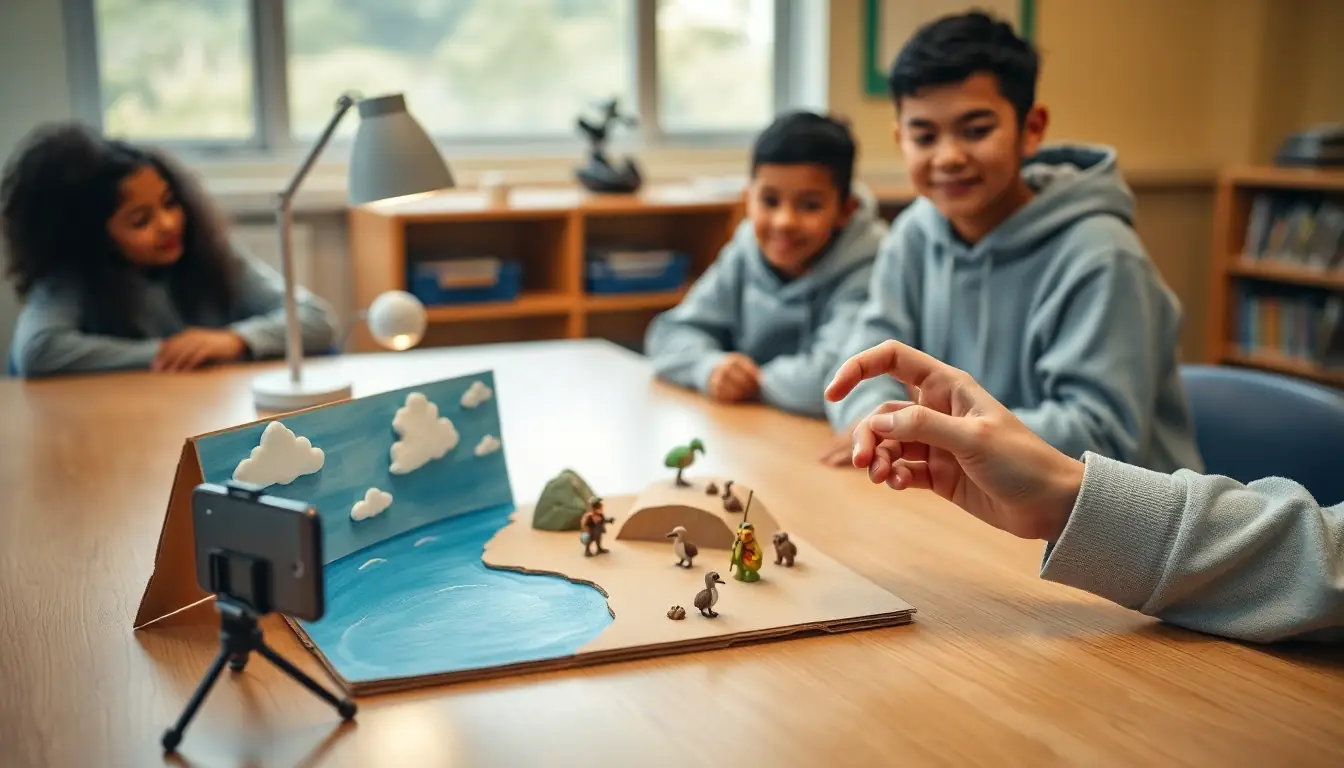
- 25 minBuild your set in a cardboard box or on a table: a backdrop, a ground, and two or three props. Tape it all down.
- 5 minCheck your storyboard against the set. Mark the camera position for each shot with tape.
Getting started
Use a four-box storyboard: start, problem, attempt, ending.
Stretch
Plan a camera move, such as a slow push in towards the character, by moving the tripod a few millimetres each frame.
Checkpoint
A complete storyboard with shot types and timings, a set that is taped down, and marked camera positions.
Activities for this week
- Storyboard a 30-second story: How do filmmakers plan every shot before they shoot?
- Set building and composition: How do you build a tiny world that looks good on camera?
Useful this week
- Storyboard ↗ How filmmakers and animators plan every shot before shooting.