Session 1 · VOICE: Validate the Problem
Three puzzles, one invisible answer
- 10 minHook: project a drop of pond water through a digital microscope. Silence for one minute while everyone watches. What is moving? Is it alive? How do you know?
- 15 minMeet the three puzzles: the green pond, the warm compost heap and the rising bread dough. In groups, write what you think is happening in each and what you would need to see to be sure.
- 15 minThe 'teaspoon of soil' claim: scientists say one teaspoon of healthy soil holds more living things than there are people on Earth. Do you believe it? What evidence would convince you? Build a class wonder wall.
- 10 minChoose your context (garden, pond or kitchen) and write a first inquiry question. Kōkako asks one question to help you sharpen it.
Session 2 · VOICE: Observe
Earn your microscope licence
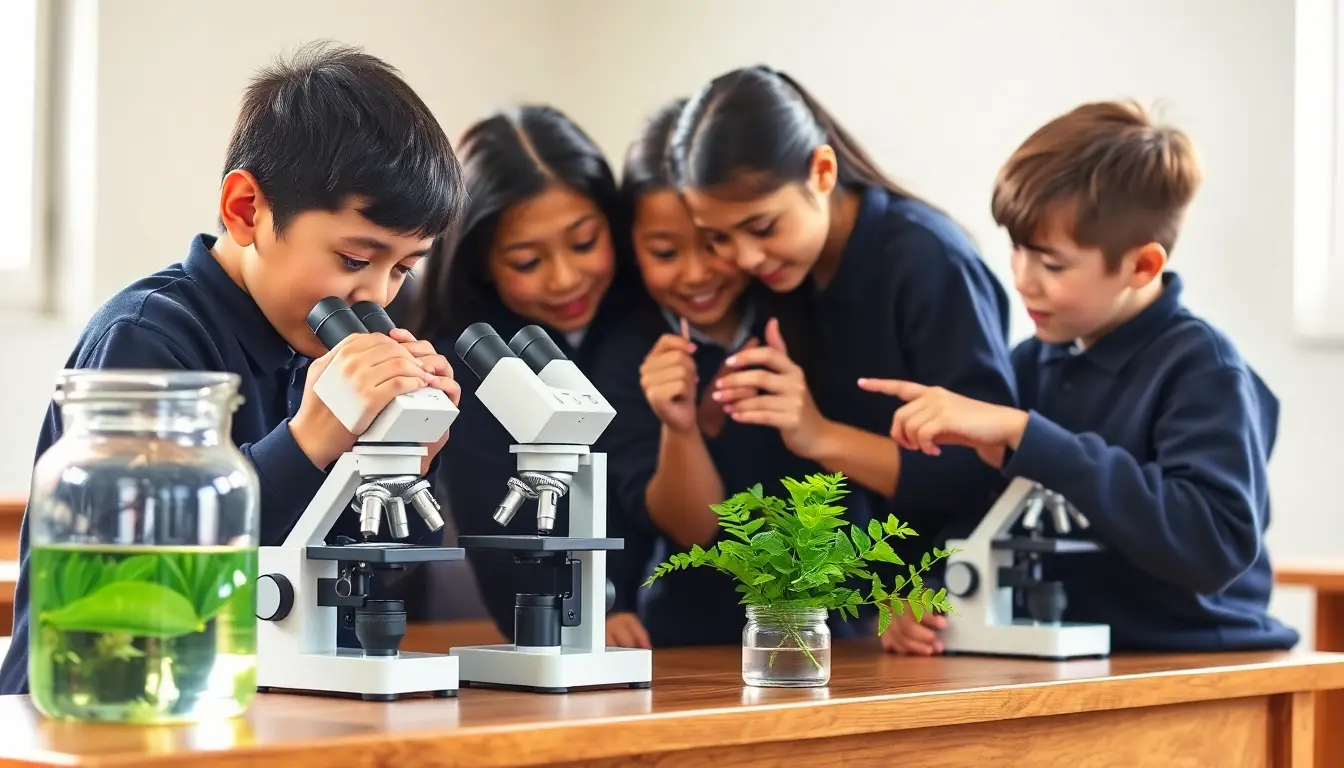
- 10 minParts of a microscope and the rules: two hands to carry, start on the lowest power, focus by moving the lens away from the slide, never use direct sunlight.
- 20 minLook at a hair, a thread of wool, a scrap of newspaper and a grain of salt. Draw each inside a circle, with a title and the magnification.
- 15 minMake your first wet mount: a thin piece of onion skin, a drop of iodine, a coverslip lowered at an angle to stop bubbles. Find the boxes. Those are cells.
- 5 minExit card: one thing that surprised you and one thing you want to see next.
Getting started
Use the drawing frame (circle, title, magnification, labels) and work with a partner who holds the slide steady while you focus.
Stretch
Robert Hooke named cells in 1665 after looking at cork. Find out what he saw and why he chose that word.
Checkpoint
Everyone has a microscope licence and at least one labelled drawing of real cells.
Activities for this week
- Microscope licence: How do you get a sharp, safe view of something tiny?
- Onion and moss cells: What do real plant cells look like?
Useful this week
- Microorganisms ↗ What microbes are, where they live and why they matter, with many NZ stories.
- Exploring with microscopes ↗ How microscopes work and what scientists see with them.
- Cells ↗ The main parts of plant and animal cells, and how to look at onion cells.
- Cell size and scale ↗ Zoom from a coffee bean down to a carbon atom to feel how small cells really are.