Session 1 · VOICE: Observe
Surface slide
- 10 minRub your hands together fast. What do you feel? Friction turns movement into heat.
- 25 minDrag a block with the force meter across sandpaper, carpet, lino, a plastic sheet and a wet towel. Record the reading as it starts to move. Repeat each three times.
- 15 minWhere is friction useful (shoe soles, bike brakes, tyres on a wet road) and where is it a problem (squeaky axles, a car that stops too soon)? Build a class list.
Session 2 · VOICE: Investigate
Build and first run
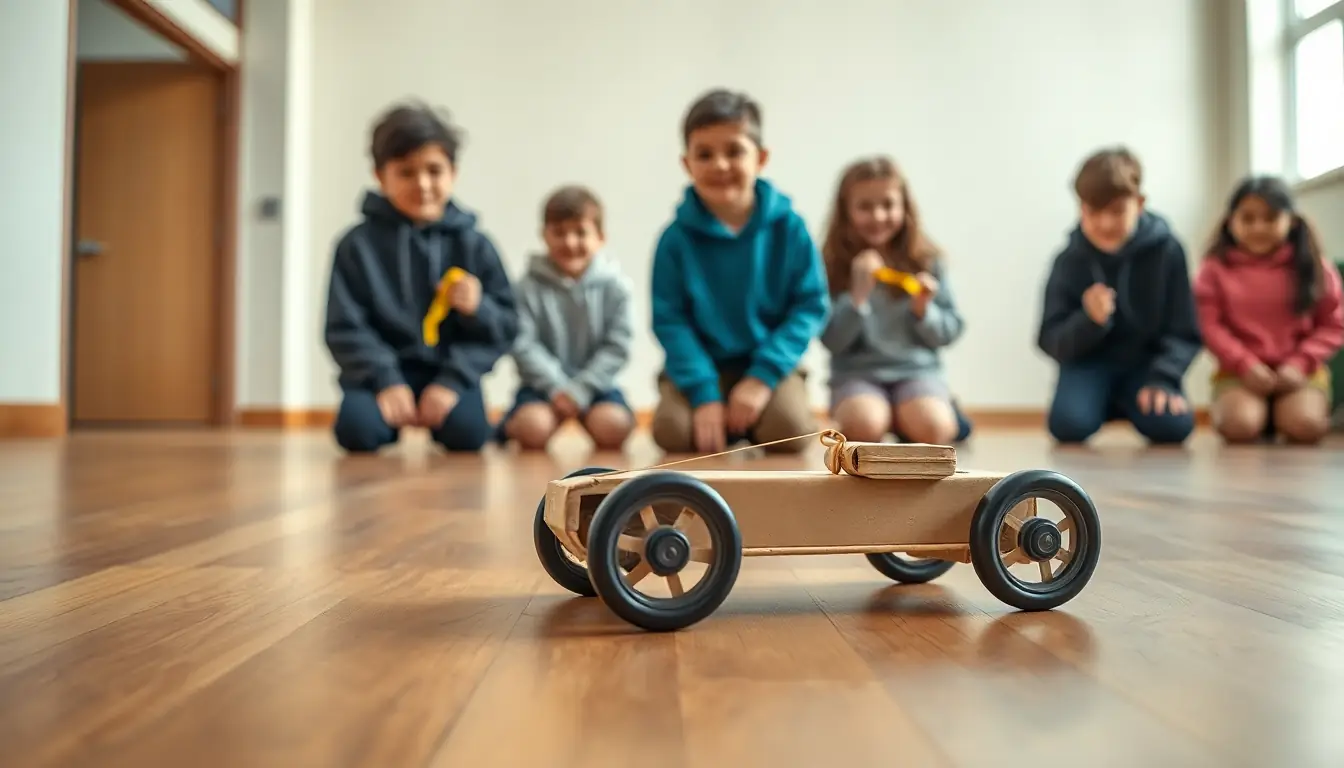
- 10 minHand out identical kits. Read the brief: build a car powered only by a wound elastic band. It must go at least 10 centimetres.
- 25 minBuild. Wind the axle the agreed number of turns. Place the rear axle on the start line. Run 1. Measure and record.
- 15 minPause sheet: result, one observation, one change you will make and why. Kōkako asks one question about your planned change.
Getting started
Start with the basic car diagram and the kit checklist; build it first, then improve.
Stretch
Predict how far your car would go on carpet compared with the hall floor, and explain your prediction using friction.
Checkpoint
Every group has run 1 recorded and one named change ready, with a reason.
Activities for this week
- Friction slide: Which surface has the most grip?
- The elastic-band car challenge: What single change makes your car travel furthest?
Useful this week
- Friction – the contact force that slows or stops moving objects ↗ Friction ideas, NZ contexts and hands-on activities.
- Forces and Motion: Basics ↗ Push crates with and without friction and watch the force arrows.
- Forces and speed ↗ How forces speed things up and slow them down, with cycling examples.