Session 1 · VOICE: Validate the Problem
Hunting for cold spots
- 10 minHook: touch test. Hands on metal, wood, plastic and wool that have all been in the room overnight. Which feels coldest? Vote, then hold the thought.
- 20 minRoom survey in groups: measure temperature near a window, a door, the floor, the ceiling (standing on nothing: use a pole-mounted thermometer or a tall student at arm's length), and the middle of the room. Mark each reading on a floor plan.
- 15 minShare maps. Which places are coldest? Who looks after this space and why might it matter to them? List the questions we could test.
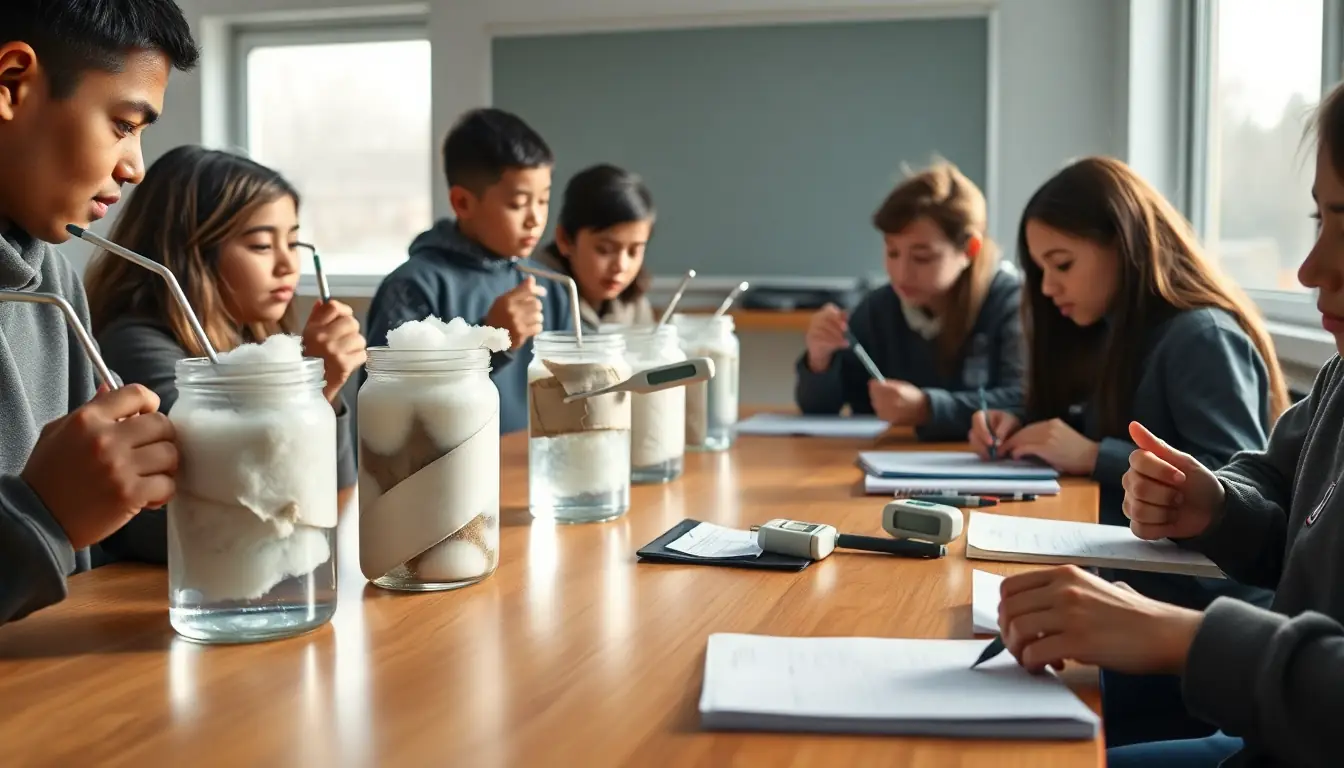
- 5 minChoose a class focus question, for example: 'Which material best slows heat escaping from a warm container?'
Session 2 · VOICE: Observe
Solids, liquids and gases up close
- 10 minLook at three sealed syringes: one with air, one with water, one with sand. Push each plunger. What do you notice? Record observations, not explanations yet.
- 15 minParticle role-play: be a solid (tight rows, jiggling on the spot), a liquid (close but sliding past each other) and a gas (spread out, zooming). What changes when the 'teacher heater' turns up?
- 15 minDraw particle pictures for ice, water and steam. Label: spacing, movement, attraction. Particles do not grow or melt; their movement and spacing change.
- 10 minExit card: explain the syringe results using particles.
Getting started
Use the picture bank of particle diagrams and sort them into solid, liquid and gas before drawing your own.
Stretch
Explain why a gas can be squashed but a liquid almost cannot, using the words 'space between particles'.
Checkpoint
Everyone has a room map with at least five readings and can draw particles in all three states.
Activities for this week
- Syringe squash: Why can you squash air but not water?
Useful this week
- Insulation ↗ How trapped air and insulating materials slow heat escaping from buildings.
- States of matter ↗ Clear particle pictures of solids, liquids and gases.
- States of Matter: Basics ↗ Heat and cool particles on screen and watch them change state.