Session 1 · VOICE: Observe
Conduction, convection, radiation stations
- 5 minSafety briefing: warm water only, the teacher handles anything hot.
- 12 minConduction: place ice cubes on a metal tray, a plastic lid and a wooden board at the same time. Which melts first? Why did the metal feel coldest last week?
- 12 minConvection: drop dyed warm water into a clear container of cold water (a small jar lowered in). Watch and draw the movement.
- 12 minRadiation: two cans of water, one wrapped in black paper, one in foil, in the sun or under a lamp. Take temperatures at the start and after 10 minutes.
- 9 minSort 12 everyday pictures (toasting marshmallows, a heater, a pot handle, a sunny window, a hot water cylinder) into conduction, convection or radiation.
Session 2 · VOICE: Investigate
Planning a fair insulation test
- 10 minRevisit the focus question. What will we change? What will we measure? What must stay the same?
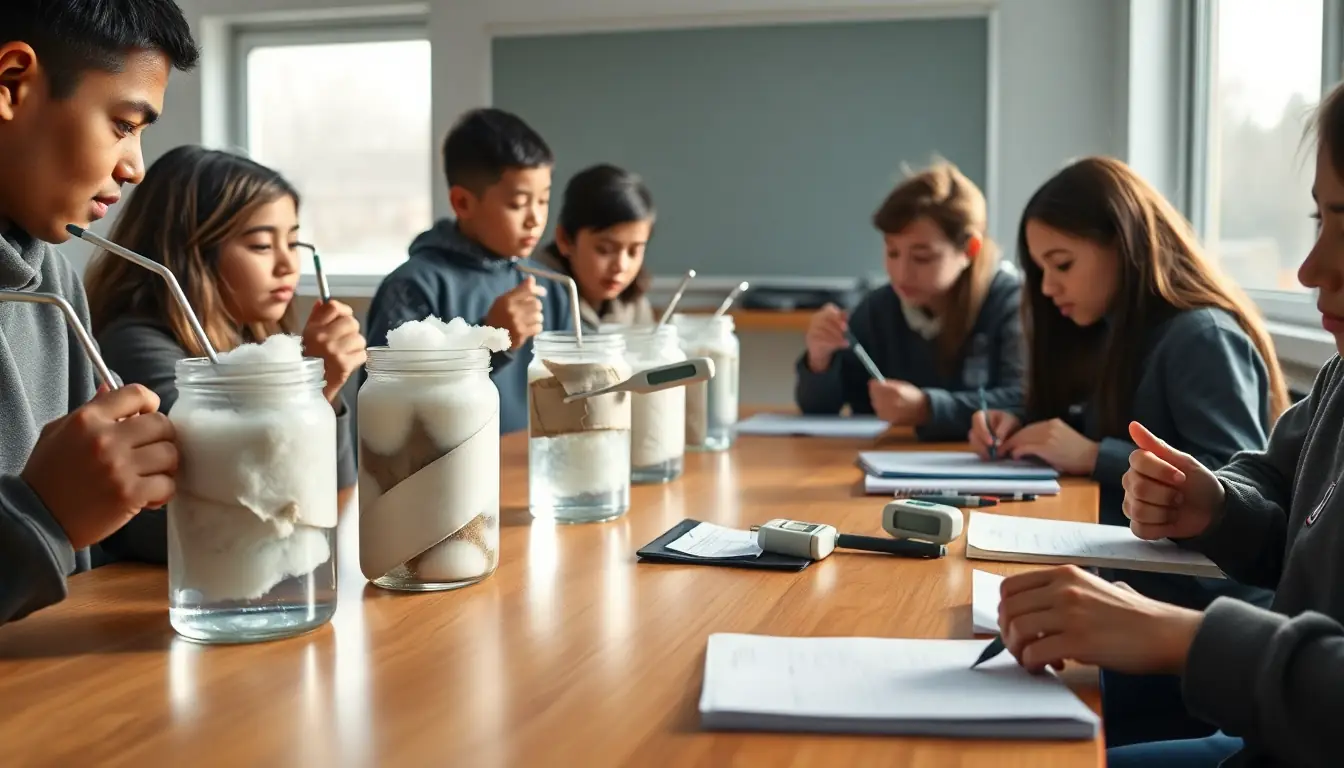
- 20 minGroups plan: same jar, same amount and starting temperature of water, same thickness of wrap, readings every 5 minutes for 30 minutes. Include a no-wrap control.
- 10 minKōkako asks one question about your plan. Improve one thing.
- 10 minWrite a prediction with a particle reason: 'I think … because …'.
Getting started
Use the three-column table (conduction / convection / radiation) with a picture clue at the top of each column.
Stretch
Find an example where all three kinds of heat transfer happen at once, such as a hāngī, a woodburner or a hot water bottle in bed.
Checkpoint
Each group has a written plan that changes only the wrapping material and includes a control.
Activities for this week
- The ice melt race: Which material moves heat into ice fastest?
- Convection in a jar: Does warm water rise?
- Black, white or shiny?: Which surface soaks up the most heat from the sun?
Useful this week
- States of matter ↗ Clear particle pictures of solids, liquids and gases.
- States of Matter: Basics ↗ Heat and cool particles on screen and watch them change state.
- Energy Forms and Changes ↗ Watch heat flow between blocks of iron, brick and water.
- Kitchen science ↗ Everyday kitchen investigations into mixing, heating and changing materials.