Session 1 · VOICE: Investigate
Separate the mystery mix
- 10 minEach group gets a mix of sand, salt, small paper clips and dried peas. Plan how to separate every part using only physical methods.
- 30 minTry it: sieve, magnet, dissolve, filter, then leave the salty water to evaporate on a saucer by the window.
- 10 minSort mixtures: which are the same all through (salt water, air) and which are not (sand and water, muesli)? Explain with particle drawings.
Session 2 · VOICE: Create Conclusions
Physical or chemical change?
- 25 minStations with goggles on: dissolve sugar in cold and warm water; melt chocolate in a bag in warm water; baking soda and vinegar in a zip-lock bag; damp steel wool in a jar (set up earlier); teacher demo of a candle burning under a jar.
- 15 minFor each, record signs: new colour, gas bubbles, temperature change, light, a new solid. Is it reversible?
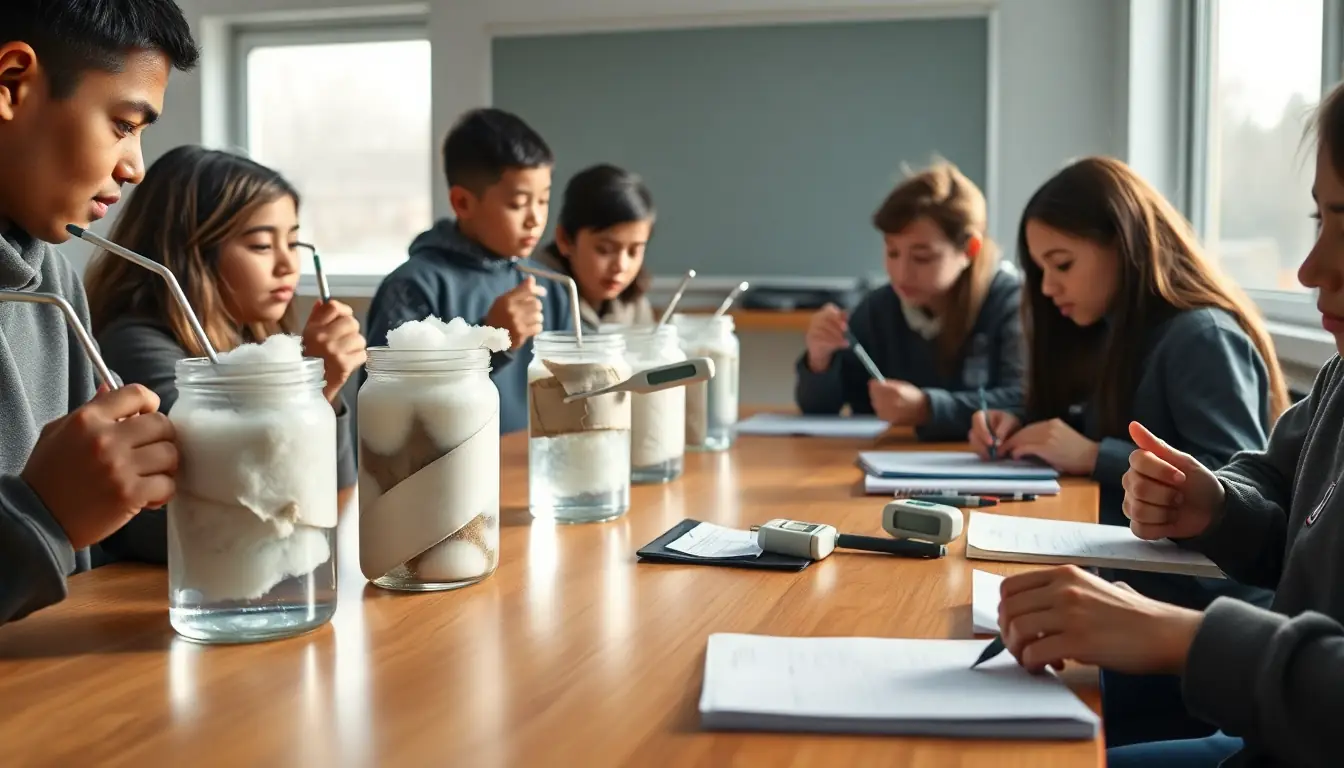
- 10 minWrite a conclusion for our insulation test with claim, evidence and reasoning, using the class graph.
Getting started
Use the 'signs of a chemical change' checklist card at each station.
Stretch
Design a test to see whether temperature changes how fast sugar dissolves, or how fast a fizzy drink goes flat.
Checkpoint
Every student can name two signs of a chemical change and has a written claim about the best insulator.
Activities for this week
- The mystery mixture: Can you get every part of a mixture back out again?
- Sugar race: Does sugar dissolve faster in warm water or cold water?
- Change detectives: Which changes make a brand-new substance?
Useful this week
- Energy Forms and Changes ↗ Watch heat flow between blocks of iron, brick and water.
- Kitchen science ↗ Everyday kitchen investigations into mixing, heating and changing materials.
- Changes of matter ↗ Articles and activities on physical and chemical changes to check your conclusions.