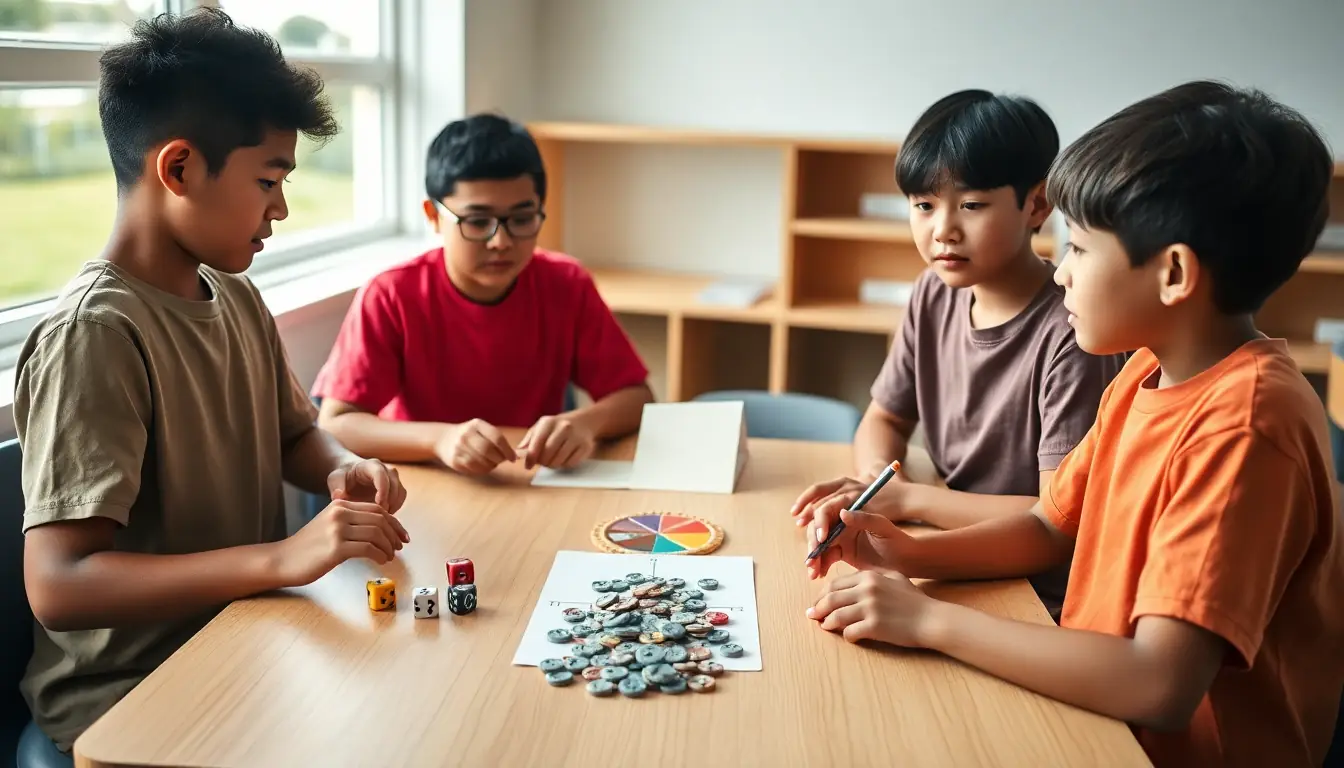
Session 1 · SOLVE: Organise Information
Thirty flips, three hundred flips
- 10 minPredict: if you flip a coin 30 times, how many heads will you get? Write your guess.
- 15 minFlip 30 times and record in a tally table. Work out the fraction, decimal and percentage of heads.
- 15 minPool all pairs' results in a class table. Make a dot plot of each pair's number of heads.
- 10 minDiscuss: why did pairs get different results? Is the class total closer to half?
Session 2 · SOLVE: Organise Information
Listing every outcome
- 10 minRead 'Counting the chances'. What is a sample space?
- 20 minTwo-dice table: fill in a 6 × 6 table of sums. Count how many ways to make each total from 2 to 12.
- 15 minWinning Differences again: make a 6 × 6 table of differences. Count the ways A and B can win.
- 5 minWrite the theoretical probability of A winning as a fraction, decimal and percentage.
Getting started
Start with a list for one coin and one die, then a two-coin tree, before the 6 × 6 table.
Stretch
Use a tree diagram to list all the outcomes of flipping three coins. What is the probability of getting exactly two heads?
Checkpoint
Each student has a two-dice table and can explain why Winning Differences is not fair.
Activities for this week
- Coin flip class pool: What happens to the share of heads as we flip more and more times?
Useful this week
- Probability tree diagrams ↗ How to list every outcome of two or more events without missing any.
- Dice roller ↗ Roll lots of true random dice online when you need more trials quickly.