English · World 5 of 8 · Years 7–8
Speak Up: Speeches, Podcasts and Pepeha
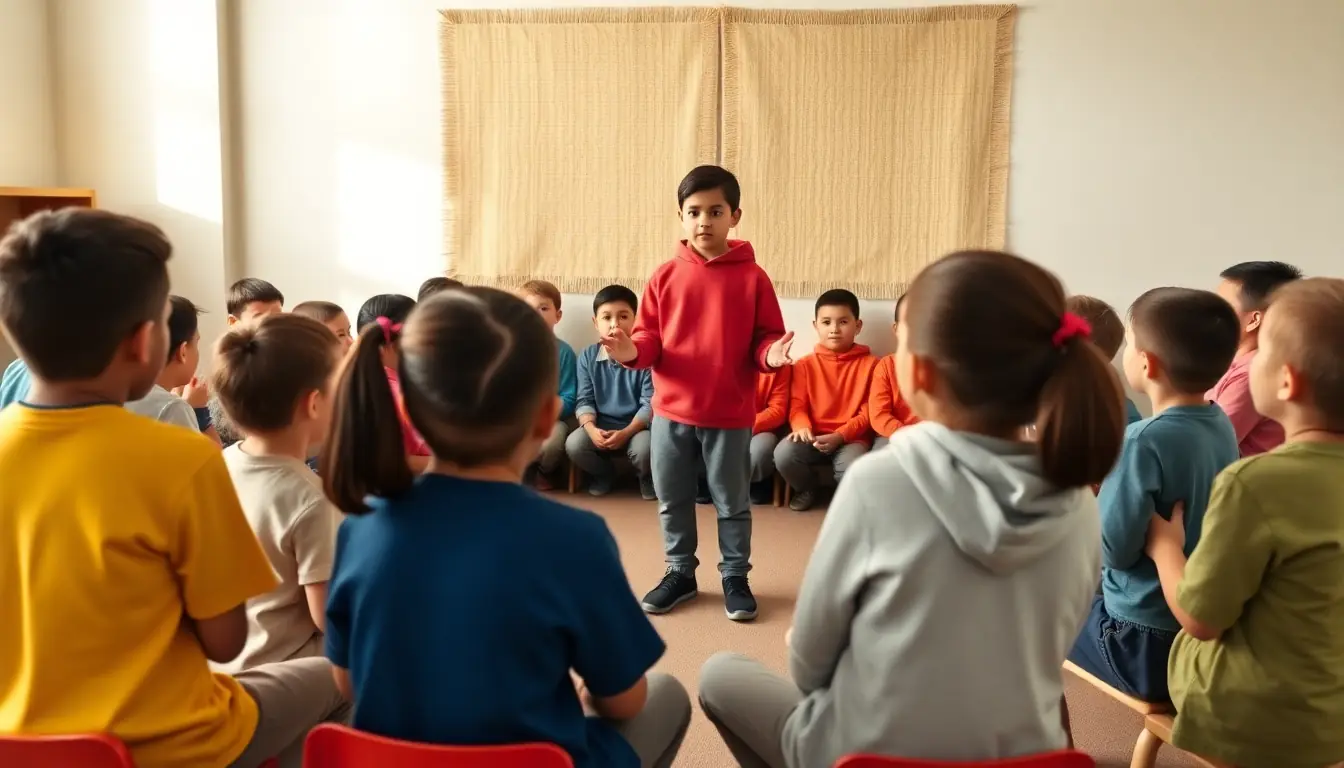
Hook them, move them, prove it, leave them thinking. Build a three-minute speech, record a podcast and stand tall to introduce yourself.
Big question: What makes people really listen, and how do I find a voice that is truly mine?
- You'll make
- A three-minute speech delivered from cue cards at a whānau speech festival, a short podcast episode made with classmates, and a personal introduction (a pepeha or mihi, prepared with guidance).
- For
- Whānau and classmates at a speech festival, listeners of the school's podcast series, and guests you welcome to the class or school.
- Time
- 5 weeks · 2 sessions a week
Your mission
Why it matters
Your class is running a speech festival for whānau at the end of the term, and the school wants a short podcast series about the people and places that matter to its students. You'll build a three-minute speech paragraph by paragraph, learn to listen as well as speak, and prepare an introduction that tells people who you are and where you stand.
Speaking well is one of the most useful things you will ever learn: in class, in job interviews, on the marae, at a family celebration, or when something unfair needs saying. It isn't about being the loudest. Strong speakers plan a clear message, give people reasons to trust them, make them feel something, back it up with evidence, and finish with something to remember. Good listeners matter just as much: they make space for quieter voices and help a group think together.

Your first step
Pick a speech topic from the list, then ask 'So what?' three times until you find the idea inside it you actually want to argue. Write that idea as one sentence starting 'This speech is really about…'.
Make it yours
Choose a context
Same big question, three different places to explore it. Pick the one that fits your class and community.
The speech festival
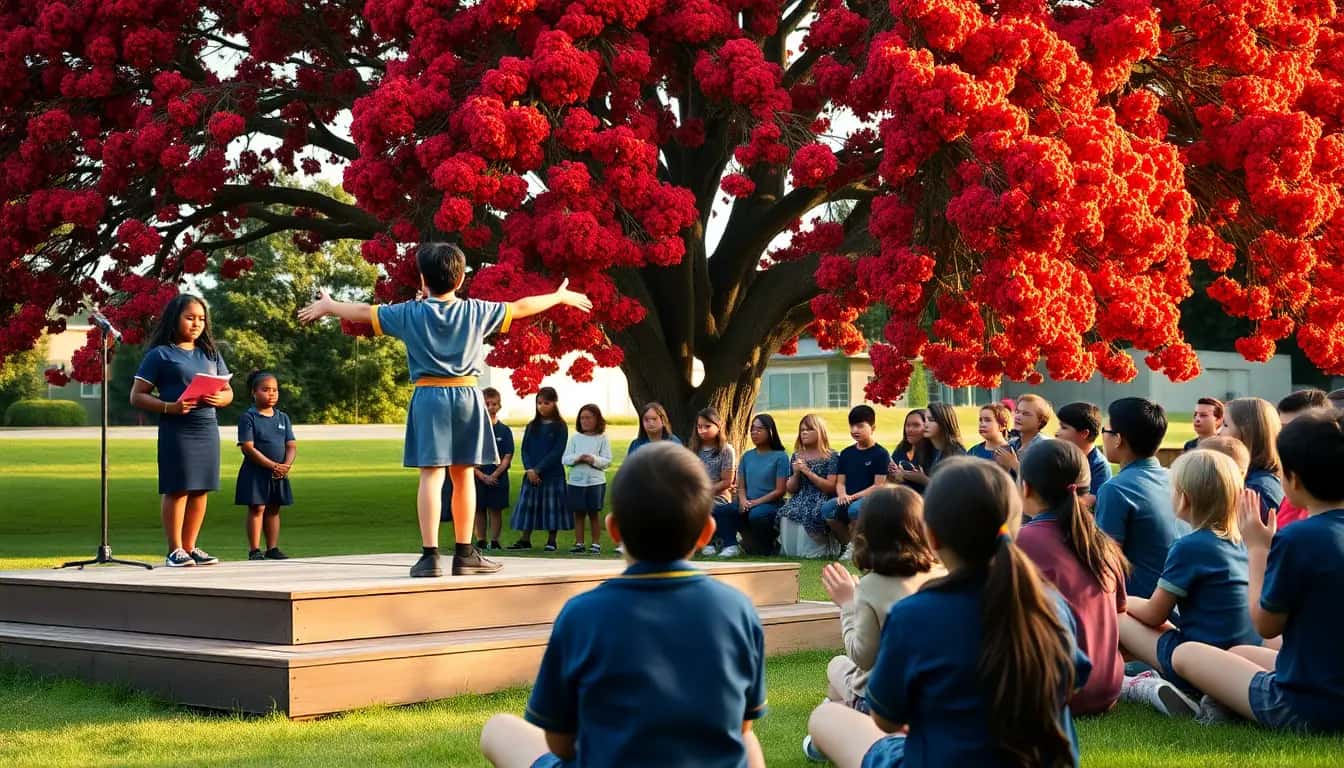
A classic three-minute speech on a big idea: every object tells a story, your past should not define your future, everyone deserves to have their story heard, the stories we tell today shape the future. The best speeches go to assembly, a whānau evening or a local speech competition.
On air: the class podcast
A podcast series for the school website or newsletter: interview a grandparent about an object that matters to them, a local sports coach, a café owner, or a classmate who has lived in another country. Plan segments, write signposts and edit it into an episode whānau can play at home.
Welcomes and occasions
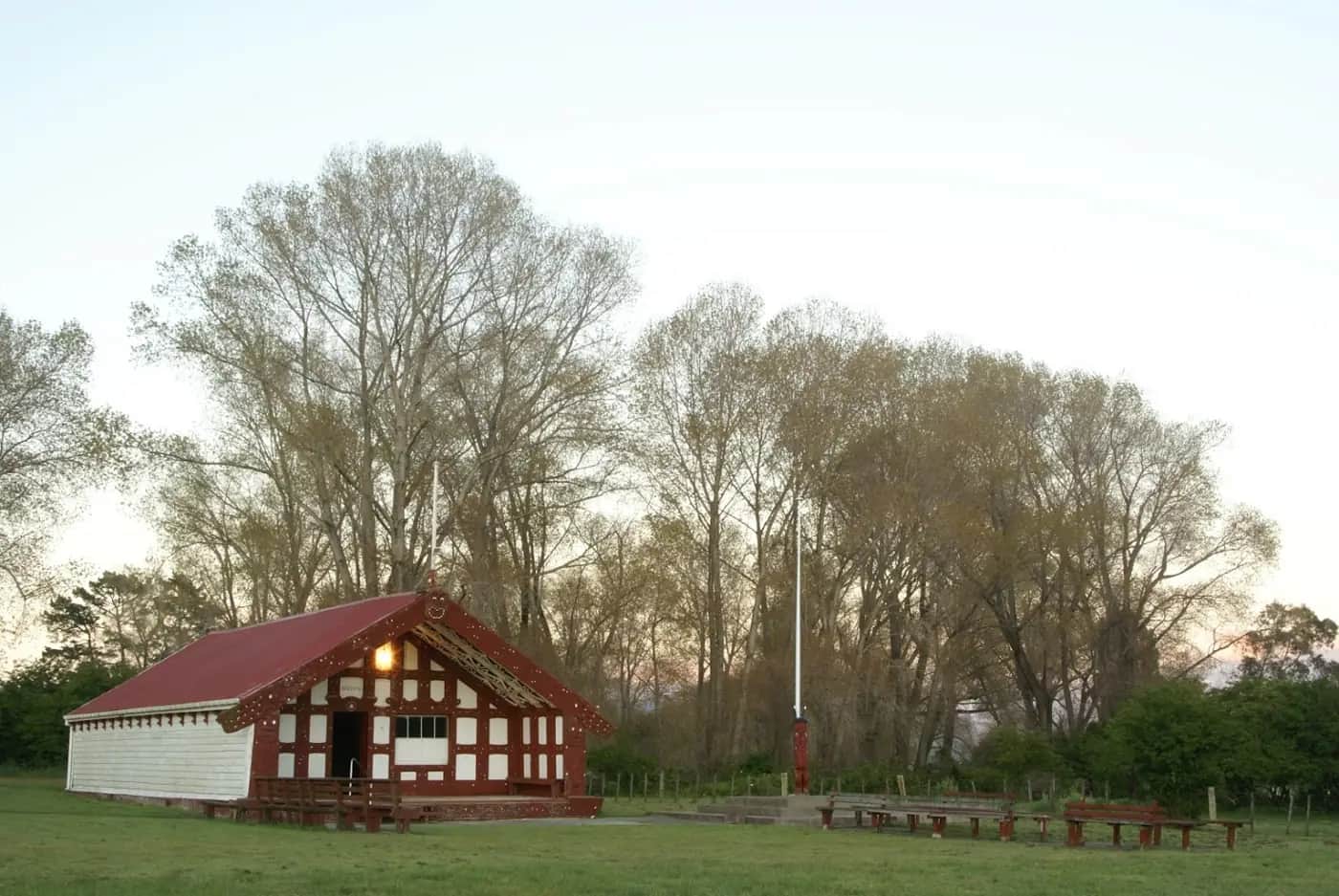
Speaking when it counts: welcoming new students or visitors, opening a Matariki celebration, thanking a guest speaker, or introducing yourself with a pepeha or mihi at a school pōwhiri. Work with your school's te reo Māori lead and whānau so every word is right.
AUTHOR
Week by week
Two sessions a week, each with Getting started and Stretch support so the whole class works together.
- W1Listen first, then hook your audienceAudience: What makes people listen? · Understand: Hook and angle
- W2Trust and feeling: ethos and pathosTechniques: Ethos: why should they trust you? · Techniques: Pathos: why should they care?
- W3Proof, and voices that carry cultureTechniques: Logos: does it make sense? · Hear Voices: Pepeha and mihi · Hear Voices: Podcasts and debates: talking together
- W4Conclusion, cue cards and voiceOrganise: Conclusion and the Thread Test · Organise: Cue cards and voice lab
- W5Speak up: festival and podcastRespond: Speech festival · Respond: Record and reflect

Hands-on
Activities
Investigations and projects that fit the weeks above. Open one to see what you need and how you'll know it worked.
Hook speed-roundWhich kind of opening makes people lean in?Open
You need: hook-type cards: question, bold statement, fact, mini-story, poem · your topic · a timer
- Write a one-sentence hook for your topic for each card, one minute each.
- In fours, read each hook aloud. Listeners hold up a thumb if they want to hear more.
- Keep your two best and add the angle sentence: 'This speech is really about…'.
- Underline the shortest sentence. Is it doing a job?
How you'll know: Listeners can tell you the angle of your speech after hearing only the introduction.
Go further: Add a concrete detail (a colour, a place, a named object) to make your hook more specific.
Fits week 1 →Listening roles fishbowlHow do good listeners help a group think?Open
You need: role cards: facilitator, speaker, listener, questioner, summariser · a discussion question · observer checklist
- Five students sit in the inner circle with a role card each. Everyone else sits outside as observers.
- Discuss the question for eight minutes. The listener must paraphrase at least twice: 'So you're saying…'.
- Observers tick what each role did and note one moment the group moved forward.
- Swap so a new five take the roles, and repeat with a new question.
How you'll know: The summariser can state where the group agreed and where it differed, and everyone was heard.
Go further: Take the facilitator role and bring a quiet member in without putting them on the spot.
Fits week 1 →PEEL buildHow do I turn an idea into a paragraph people trust?Open
You need: PEEL strips in four colours · the school-garden example paragraph · your speech angle
- Label the example: which sentence is the Point, Evidence, Explain and Link?
- Write your own four sentences on the four coloured strips.
- Mix up your strips and ask a partner to put them in order. If they can't, a link is missing.
- Glue the paragraph into your book and read it aloud.
How you'll know: A partner can reorder your strips correctly, and your Explain sentence adds something new rather than repeating.
Go further: Write a second PEEL paragraph using evidence from someone else's experience.
Fits week 2 →The 'Imagine…' momentHow do I make an audience feel it, not just hear it?Open
You need: your pathos paragraph · a partner · a highlighter
- Write a flat, general sentence about your topic ('Some people get left out').
- Rewrite it as an 'Imagine…' or 'Picture…' sentence that puts the listener inside one specific moment.
- Add a short sentence straight after it for impact.
- Read both versions to your partner. Ask which one they felt, and which word did it.
How you'll know: Your partner can name the feeling and the word or image that caused it.
Go further: Use sensory detail (a sound, a smell) in your 'Imagine…' sentence.
Fits week 2 →Fact to argumentHow do I stop a fact just sitting there?Open
You need: three bare facts about your topic from trusted sources · connective cards: that means, because of this, as a result, that's not opinion
- Write each fact on its own line, with its source.
- Add an Explain sentence to each using a connective card.
- Add a Link sentence that ties it back to your angle.
- Choose the strongest one for your logos paragraph.
How you'll know: Each fact is followed by what it shows and why it matters to your angle.
Go further: Answer the 'that's just your opinion' objection in one confident sentence.
Fits week 3 →Place map for a pepeha or mihiWhere do I stand, and how do I say it with respect?Open
You need: A3 paper and coloured pencils · guidance from whānau or the school's te reo lead · Te Aka Māori Dictionary for pronunciation
- Draw the places you belong to or stand in now: a maunga, an awa, a lake or the sea, your home, your family's heritage lands.
- With whānau or your te reo lead, check which parts of a pepeha or mihi fit you, and what each line means.
- Write your introduction line by line, and practise each te reo Māori word with the audio.
- Say it to a partner, then to your group, standing tall and making eye contact.
How you'll know: You can say your introduction clearly, explain what each line means, and know that every connection in it is true for you.
Safety: Never guess or borrow iwi, hapū or waka connections. If you're not sure of your heritage, introduce yourself through the place you live and the people you are with now.
Go further: Open a class event or welcome a visitor with your mihi.
Fits week 3 →Podcast in a podHow do we make listening easy for someone who can't see us?Open
You need: a device with a voice recorder · headphones · a planning grid with three segments · a quiet corner
- Plan three segments (for example an intro chat, an interview, a 'did you know?' fact) and who speaks in each.
- Write signposts for each change: 'Coming up…', 'So that's the first thing…', 'Before we go…'.
- Record each segment, keeping it conversational. Re-record anything that sounds read out.
- Listen back with fresh ears and note one thing to cut and one thing to explain better.
How you'll know: A listener from another class can tell you the three parts of your episode and one thing they learned.
Safety: Use first names only. Don't say where anyone lives. Get whānau consent before any episode is shared outside the class.
Go further: Add an analogy that helps listeners picture something tricky ('It's like…').
Fits week 3 →Voice labHow can the same words mean different things?Open
You need: one line from your speech · a partner · a pencil to mark your cue cards
- Say your line five ways: fast, slow, loud, soft, and with a pause before the key word.
- Your partner says what each version made them feel or notice.
- Mark your cue cards with symbols: / for a pause, underlining for stress, an arrow for speeding up.
- Add one gesture that fits a key moment, and try it with your partner watching.
How you'll know: You can explain where and why you change pace, volume and pause, and your partner notices the effect.
Go further: Deliver your conclusion with no cue card at all.
Fits week 4 →Look closer
From the real world

Background reading
Read to understand
Short readings written for Kōkiri Learn students, with their sources.
- From hook to conclusion: building a three-minute speechSix paragraphs, one clear idea: the structure behind speeches that make people listen.
- Pepeha and mihi: introducing yourself in AotearoaWhat pepeha and mihi are, why they connect people to land and each other, and how to prepare one with respect.
- Podcasts and debates: talking with, not atHow podcasts sound like a conversation, how debates let people disagree fairly, and the listening roles that make both work.
Trusted NZ sites
Explore more
Placed at the stage of the journey where each one helps.
Audience
Cool kids content ↗RNZ
NZ podcasts made for kids: hear how hosts talk to listeners.
Techniques
Speech New Zealand ↗Speech New Zealand
Speech and communication awards and ideas for young speakers.
Techniques
NZ Schools' Debating resources ↗New Zealand Schools' Debating
Speaker roles, rebuttal tips and example debates.
Hear Voices
Pepeha ↗Tākai
What a pepeha is and how whānau can build one together.
Hear Voices
Te Aka Māori Dictionary ↗Te Aka
Meanings and audio pronunciation for pepeha, mihi and other words.
Hear Voices
Whaikōrero ↗RNZ
Learn about Māori oratory and the language of formal speech.
Respond
Storytime ↗RNZ
NZ stories read aloud: listen for pace, pause and voice.
Respond
NZ On Screen ↗NZ On Air
NZ speeches, interviews and documentaries to study speakers.
Real audiences
- Whānau at an end-of-term speech festival
- The school assembly and the school's podcast page or newsletter
- Visitors and new students you welcome with a mihi
Work with other schools
- Swap podcast episodes with a class in another region, each introducing their own place, and reply with a short 'listener letter'.
- Hold an online debate between two schools on the same motion, with mixed-school teams for the second round.
- Share speech topics and exemplars across schools and hold a joint video speech showcase.
Stretch challenges
- Enter a local speech competition or Speech New Zealand award.
- Join or start a debating team and try a motion with the other side of your argument.
- Interview a grandparent or elder for the podcast about an object that tells a story.
- Learn to open a class event with a mihi, with guidance from your school's te reo lead.
New Zealand Curriculum
What this world covers
Mapped to the refreshed Phase 3 statements. The whole class covers both the Year 7 and Year 8 sequences over two years.
English · Oral language
Presenting to others: rhetorical questions, inclusive pronouns and cue cards in speeches; conversational language, planned segments and signposting in podcasts; varying pace, volume and tone; non-verbal communication
Year 7 sequence
English · Oral language
Culturally responsive oral structures (mihi, pepeha, whaikōrero) and cultural expressions such as whakataukī, kīwaha and proverbs to connect with an audience
Year 7 sequence
English · Oral language
Debates and podcasts; presenting counter-arguments with evidence through rebuttal; leading discussion when views differ
Year 8 sequence
English · Oral language
Listening and responding: paraphrasing, taking on group roles (facilitator, speaker, listener, questioner, summariser), and summarising agreement and difference
Year 7 sequence
English · Reading
Identifying language features in exemplar speeches (repetition, rhetorical questions, contrast, listing) and explaining their effect on an audience
Year 7 sequence
For teachers: how to run it
This world is built on the Speak Up oral language unit: five content lessons that each build one paragraph (introduction: hook and angle; ethos; pathos; logos; conclusion), followed by a cue-card lesson (students bring cardboard) and a rehearsal and delivery lesson. Each lesson follows the same rhythm: read an exemplar pair aloud, discuss the language techniques, teach the concept, students try the skill in a sentence or two, write the paragraph in their book, get peer feedback, revise, then read it aloud to a partner and refine again. Use the Speak Up exemplar pairs (the brooch and the rugby boot; the reading group and the cousin; Aria and being talked over; the photograph and the awa) and the student worksheets for warm-ups and 'Find it' language tasks; use your existing speech rubric for delivery. Pepeha and mihi: these are taonga. Invite your school's te reo Māori lead, kaumātua or whānau to guide this session; teach correct pronunciation (Te Aka Māori Dictionary has audio). Students with Māori whakapapa should prepare their pepeha with their own whānau, who hold that knowledge; never guess or invent iwi, hapū or waka connections. Students without Māori whakapapa can prepare a mihi or a pepeha-style introduction that names the places they live and belong to, and their family's heritage, in a form your school's te reo lead endorses; some whānau prefer 'Ko ___ te maunga e tū nei' style (the mountain that stands here) rather than claiming a maunga as their own. Pasifika and other students can share a greeting in their heritage language if they choose. Handle identity sensitively: some students are in care, have complicated family stories or don't know their heritage, so always offer an alternative (an introduction about the place you live and the people you're with now). Listening roles (facilitator, speaker, listener, questioner, summariser) come from the curriculum's listening and responding strand; rotate them so quieter students lead. Podcasts: record on school devices; get whānau consent before publishing voices, use first names only, and avoid publishing anything that identifies where a child lives. Debates: use the New Zealand Schools' Debating guides for roles and rebuttal. Differentiation: sentence starters from each lesson's language toolbox, shorter speeches (90 seconds), paired speeches, and recording to a partner before a whole-class delivery for anxious speakers. Kuaka, the AI companion, only asks questions about students' choices; it never writes speeches or marks them.
Plan this world into any term with the two-year planner. Students can record their thinking in their Kōkiri Learn portfolio.






Ready to run it with your class?
Free trial for NZ schools. One combined Years 7–8 class, any term.