
The Arts · World 1 of 8 · Years 7–8
He Kōrero Auaha: Art That Speaks
Pick one idea you really care about, then make an artwork that says it without a single word. Explain it, exhibit it, and see who gets it.
Big question: How can an artwork say something that people understand and feel, without using words?
- You'll make
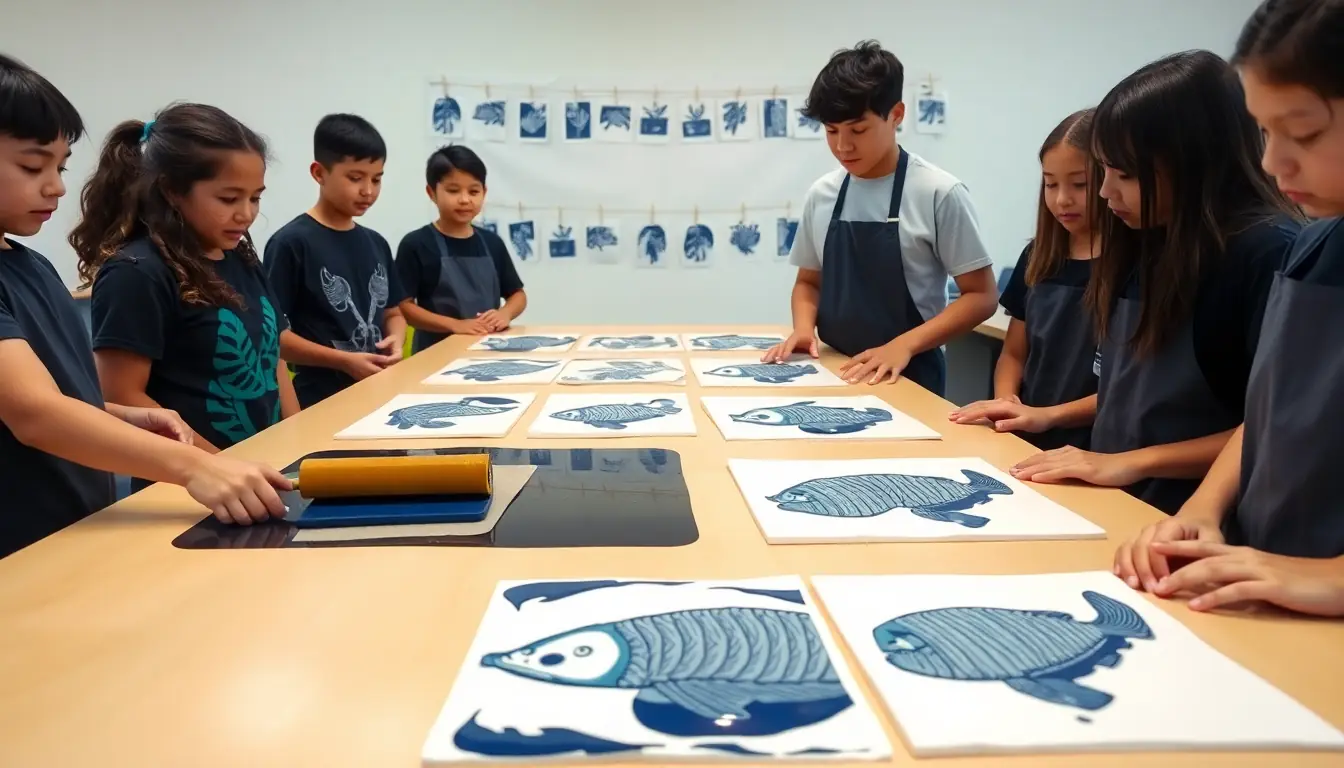
- One original artwork (a drawing, painting, collage or mixed-media piece, or a sound or movement piece if you choose that option) that communicates a single idea, plus a 100–150 word artist statement and your process page of trials and changes.
- For
- Whānau, classmates and visitors at a class exhibition or school performance
- Time
- 4 weeks · 2 sessions a week
Your mission
Why it matters
You have something to say: about your place, your whānau and who you are, or an issue that bugs you. A poster would just tell people. An artwork can make them stop, look twice and feel it. In four weeks you will turn one idea into an original work, write an artist statement, and hang it in a class exhibition where visitors try to read your idea before they read your words.
Artists have always been storytellers and truth-tellers. Michel Tuffery made a life-sized bull from old corned beef tins to get people talking about food, trade and the Pacific. When you learn how colour, shape, symbols and composition carry meaning, you can read the images around you (ads, murals, logos, memes) more sharply, and you have a new way to speak up about what matters to you.

Your first step
Write your idea in one sentence starting 'I want people to feel or understand…'. Collect three stimulus images, objects or sounds that connect to it. Then make two quick, very different trials of the same idea: one in pencil or charcoal, one in torn paper or colour.
Make it yours
Choose a context
Same big question, three different places to explore it. Pick the one that fits your class and community.
My place
A maunga you see every morning, the awa by the school, the bus stop, the dairy, a skate park, a marae or church hall, a paddock at dawn. What does this place mean to you, and what would a stranger miss? Collect photos, rubbings of textures, a map and sounds recorded there.
Who I am and where I come from
Identity, whānau and heritage: the languages spoken at your house, a grandparent's recipe, a cloth or taonga that is special, moving from another country, being the eldest. Work from objects and stories you are allowed to share, and create your own symbols rather than borrowing sacred ones.
An issue I care about
Plastic on the beach, kauri dieback, rising seas in the Pacific, kindness online, a local stream that smells. Artists from Marilynn Webb to street muralists have used art to protest and to care. Choose one issue and one feeling you want your audience to leave with.
CREATE
Week by week
Two sessions a week, each with Getting started and Stretch support so the whole class works together.
- W1Find your idea and learn to read artConnect: What do you want to say? · Respond: Looking closely
- W2Try it two ways and find your symbolsExperiment: Two ways, one idea · Experiment: Symbols and colour moods
- W3Compose the work and make it strongerArrange: Where does the eye go first? · Transform: Critique and refine
- W4Exhibit your work and explain your choicesExhibit: Write the artist statement · Exhibit: Opening night (or day)

Hands-on
Activities
Investigations and projects that fit the weeks above. Open one to see what you need and how you'll know it worked.
Describe, analyse, interpretHow do you read an artwork like a detective?Open
You need: a printed or projected New Zealand artwork (Te Papa Collections Online is a good start) · visual diary · timer
- Look for three silent minutes. Resist the urge to decide if you like it.
- Describe: list ten things you can see, including colours, shapes, materials and size.
- Analyse: where does your eye go first? What is repeated? What is big, small, bright, dark?
- Interpret: what might the artist be saying? Give one clue from the work for each guess.
- Judge: does it work, and for whom? Would someone from a different background read it differently?
How you'll know: Every interpretation you write is backed by something you can point to in the work.
Go further: Find out the title and the artist's own words. Did they change your interpretation?
Fits week 1 →Identity collageHow can one image show who I am?Open
You need: magazines or printed images · coloured and textured paper · glue stick · scissors · A4 or A3 card
- Collect images, colours and textures that connect to you, your whānau or your place.
- Tear rather than cut some pieces for a softer edge. Test both.
- Arrange everything with one clear focal point before gluing anything.
- Add one symbol you designed yourself that stands for something important to you.
- Limit the final collage to the pieces that help the idea. Put the rest in an envelope.
How you'll know: A viewer can name at least one thing the collage says about you without being told.
Safety: Scissors stay on the table; pass them handles first.
Go further: Limit yourself to three colours and explain the reason for each.
Fits week 2 →Colour mood swatchesCan a colour make you feel something?Open
You need: paint, pastels or coloured pencils · a strip of card with six boxes · a list of feelings
- Fill six boxes with different colours or colour mixes.
- Without talking, write the feeling each one gives you underneath.
- Compare with a partner: which colours did you agree on? Which did you disagree about?
- Choose a three-colour palette for your artwork and write why.
How you'll know: You can explain how your palette supports the feeling in your idea.
Go further: Find out what one colour means in two different cultures (for example white, red or black) and think about who will see your work.
Fits week 2 →Sound portraitCan music show a place or feeling without words?Open
You need: Chrome Music Lab (Song Maker) or classroom instruments · headphones · your idea sentence
- Decide on tempo (fast or slow), dynamics (loud or soft) and tonality (major for bright, minor for darker moods).
- Compose a 30-second piece in Song Maker, or with instruments and a steady beat.
- Add a drone or repeated low note to hold the piece together.
- Play it to three listeners and ask what place or feeling they imagine.
How you'll know: At least two listeners describe a mood close to the one you intended.
Go further: Add a field recording from your place (birdsong, waves, traffic) under the music.
Fits week 2 →Gesture as symbolHow can a movement stand for an idea?Open
You need: open space · music or a drum · a partner
- Choose an idea, such as hope, belonging or loss.
- Create three gestures that stand for it. Make each one bigger than feels normal.
- Link them into a short sequence with smooth transitions (the way one movement flows into the next).
- Perform it twice: once fast, once slow. Which carries the idea better?
How you'll know: Your audience can guess the idea, or something close to it, from the movement alone.
Safety: Clear the space of bags and chairs; warm up wrists, shoulders and ankles first.
Go further: Add a prop (a length of fabric, a stone, a book) that changes the meaning.
Fits week 3 →Thumbnails and the five-second testHow do artists control what you look at first?Open
You need: pencil · visual diary · a card viewfinder (a rectangle cut out of card)
- Draw four matchbox-sized rectangles.
- Sketch four different layouts: symbol large and central, small and off-centre, cropped at the edge, framed by other shapes.
- Use the viewfinder over your trials to find crops you hadn't noticed.
- Show each thumbnail to a partner for five seconds, hide it, and ask what they saw first.
- Pick the layout where your main idea was seen first.
How you'll know: Your chosen layout has one clear focal point that a viewer notices within five seconds.
Go further: Make the least important part the most interesting texture, so the eye rests there after the focal point.
Fits week 3 →Critique circleHow can feedback make a work stronger without hurting anyone?Open
You need: works in progress · sticky notes · sentence starters: I notice… I wonder… What if…
- Sit in fours. The artist shows the work and says nothing yet.
- Each person gives one 'I notice', one 'I wonder' and one 'What if' on a sticky note.
- The artist reads the notes aloud and asks one question back.
- The artist chooses one change to make and one thing to keep, and writes both down.
How you'll know: Every comment is about the work (not the person), and you leave with a specific change to try.
Go further: Keep a 'feedback I didn't use' list and explain why you chose not to follow it.
Fits week 3 →Artist statement workshopWhat does a good artist statement say?Open
You need: two or three example statements from a New Zealand gallery website · highlighters · statement frame
- Highlight the idea in yellow, materials and choices in green, and influences in blue in each example.
- Draft your own using the frame: 'My work is about… I chose… because… I was influenced by…'.
- Cut every word that doesn't help. Aim for 100–150 words.
- Read it aloud to someone who has not seen your work. Can they picture it?
How you'll know: Your statement names the idea and explains at least two deliberate choices with 'because'.
Go further: Write a second, 25-word version for a label.
Fits week 4 →Look closer
From the real world

Background reading
Read to understand
Short readings written for Kōkiri Learn students, with their sources.
- Symbols in art: saying more than you showHow artists use symbols, colour and composition to carry ideas, and how to use cultural symbols with respect.
- Where does your eye go first? Composition and emphasisVisual hierarchy, emphasis and focal points: the tricks artists use to control what you notice and in what order.
- Artist statements and critique: talking about your artWhat goes in an artist statement, how to give and take feedback kindly, and why artists welcome different interpretations.
Trusted NZ sites
Explore more
Placed at the stage of the journey where each one helps.
Connect
Te Papa Collections Online ↗Te Papa
Thousands of New Zealand artworks and taonga to find ideas and influences.
Respond
Auckland Art Gallery Toi o Tāmaki ↗Toi o Tāmaki
New Zealand artists, collection highlights and short texts about artworks.
Respond
Contemporary Māori art – ngā toi hōu ↗Te Ara
How Māori artists have combined customary and new forms to say something.
Experiment
Chrome Music Lab ↗Google
Free in-browser tools for the sound portrait option.
Arrange
Public and street art ↗Te Ara
Murals and public art in Aotearoa: see how big works guide the eye.
Exhibit
Christchurch Art Gallery Te Puna o Waiwhetū ↗Christchurch Art Gallery
See how a gallery writes labels and statements about artworks.
Exhibit
The Arts in Year 7 ↗Ministry of Education
What whānau can expect their child to learn in the arts.
Real audiences
- A class exhibition for whānau, with comment cards and a 'Guess the idea' box
- A school assembly or performance evening (sound and movement works)
- A display in the local library, café or community centre
Work with other schools
- Run a joint online gallery with a partner school: each class uploads photos of works (not faces) with statements, and the other class writes 'I notice… I wonder…' responses.
- Swap artworks with a school in a very different place (rural and city, or Aotearoa and a Pacific nation) on the same theme, such as 'my place', and compare what you learn.
- Invite a local artist or gallery educator to give video feedback on works in progress for several schools at once.
Stretch challenges
- Make a series of three works on the same idea, each using a different medium, and hang them together.
- Enter your work in a local youth art award or library exhibition.
- Interview a local artist (in person or by email) about how they start an artwork and what they do when it isn't working.
- Add a sound layer: record a 30-second soundtrack that plays beside your artwork in the exhibition.
New Zealand Curriculum
What this world covers
Mapped to the refreshed Phase 3 statements. The whole class covers both the Year 7 and Year 8 sequences over two years.
The Arts · Visual arts
Combining elements, principles and conventions to express identity, stories and worldviews; visual hierarchy, emphasis and focal point; planning with thumbnails and visual diaries; responding to feedback
Year 7 sequence
The Arts · Visual arts
Describing and interpreting ideas in artworks with art terminology; symbols and patterns that carry cultural significance and protocols (tikanga)
Year 7 sequence
The Arts · Performing arts (dance and drama)
Symbolism: movements, gestures, props and colours used to represent abstract ideas (performance option)
Year 7 sequence
The Arts · Music
Dynamics, tempo, pitch and major or minor tonality linked to their effect on the listener (sound option)
Year 7 sequence
English · Oral language
Presenting an artist statement and answering audience questions with clear, purposeful language
Year 7 sequence
For teachers: how to run it
Prep: set up a visual diary (or one digital folder per student) and a trial table with charcoal, oil pastels, cheap acrylic or poster paint, magazines for collage, coloured paper, glue sticks, scissors and card viewfinders. Print or project four or five New Zealand artworks for week 1 (Te Papa Collections Online and Auckland Art Gallery have high-quality images; include at least one Māori, one Pacific and one environmental work). Book a wall, the library or the hall for week 4 and send whānau invitations in week 2. Protocols: teach the difference between being inspired by a culture and copying sacred forms. Kōwhaiwhai, tukutuku, moko and many Pacific motifs carry whakapapa and meaning; students may study and talk about them, but they design their own symbols. If a student wants to use a form from their own culture, encourage them to check with whānau. For any work involving a marae, urupā or local pūrākau, go through mana whenua and the school's iwi relationships. Safety: water-based media only; scissors and craft knives stay at a supervised station; ventilate if using spray fixative (teacher only). Critique: run structured critique circles using 'I notice… I wonder… What if…'; comments are about the work, never the person, and there are no rankings. Differentiation: supported learners use a statement frame and a three-colour limit, and can work in collage (low drawing load); confident learners make a series of three works or combine visual art with a sound layer. Photograph process (hands and work, not faces) for the process page. Pīwakawaka, the AI companion, asks one question about a choice; it never makes or judges the art. Kōkiri Lab links: the Harakeke design worlds share the same trial–feedback–change loop.
This world is live in Kōkiri Learn: students record each stage, and your dashboard shows who has started and where they are, never rankings or scores.
More Arts worlds

Ready to run it with your class?
Free trial for NZ schools. One combined Years 7–8 class, any term.