The Arts · World 4 of 8 · Years 7–8
Stage It: Drama and Devised Theatre
No script? No problem. Pick a real issue, build the play yourselves, light it, score it, and let the audience step in and change the ending.
Big question: How can a play we make ourselves help an audience see a real problem differently, and even try to fix it?
- You'll make
- A 6–10 minute devised play about a real local issue, with characters you create, a lighting and sound design run from a cue sheet, and a forum-theatre section where audience members can step in and change what happens.
- For
- Whānau, other classes, and at least one person with some power over your issue (a principal, a board member, a local board or council member, a community group)
- Time
- 5 weeks · 2 sessions a week
Your mission
Why it matters
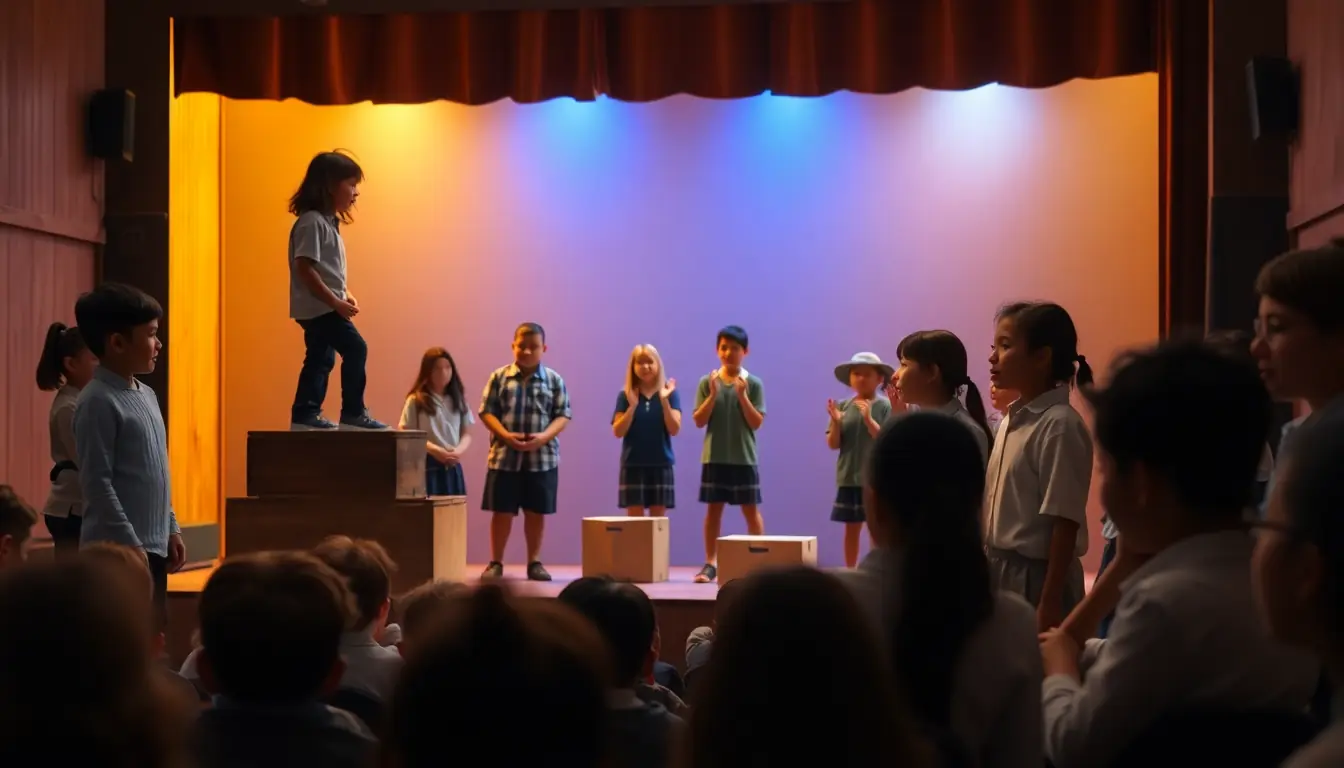
Something in your community isn't fair or isn't working: a dangerous crossing, a stream full of rubbish, a bus that never comes, a place where kids feel left out. Speeches are easy to ignore, but a scene where people watch it happen to a character is hard to forget. Your class will devise (build from scratch) a short piece of issue theatre, then perform it as forum theatre, where the audience can stop the action, step in and try a better ending.
Theatre has always been a way for people to talk about things that matter. In Aotearoa, Māori theatre companies in the 1970s toured schools and marae with plays about land and protest, and Pacific companies later told stories that had never been seen on stage. Drama builds real skills: working as a team, standing in someone else's shoes, speaking clearly, and thinking about how an audience will feel. It also shows that young people can raise issues and be listened to.
Your first step
Notice one thing this week in your school or neighbourhood that makes someone's day harder. Write down who it affects, where it happens, and one moment you could picture as a scene on stage.
Make it yours
Choose a context
Same big question, three different places to explore it. Pick the one that fits your class and community.
An issue at school or in our street
Start close to home: a busy road with no safe crossing, a playground where the same kids are always left out, a bike track that got closed, lunchtime litter, a park that has no shade. You can interview the people it affects and invite someone who can make a change to your performance.
Our place, our environment
A local stream that floods or is polluted, a beach covered in plastic, a forest remnant under threat, or rising seas affecting Pacific islands where many class families have whānau, such as Tuvalu or Kiribati. Use real facts from DOC, NIWA or your regional council, and give the land, the water or a future grandchild a voice as a character.
A moment from our local history
A protest, a strike, a flood, the opening or closing of a factory, a time people stood up for something in your town. Research it through NZ History, your library or a local museum, and work with your school's iwi and community relationships so the story is told accurately and with respect. Then ask: is anything like this still happening today?
CREATE
Week by week
Two sessions a week, each with Getting started and Stretch support so the whole class works together.
- W1What drama can do: games, freeze frames and theatre that speaks upConnect: Bodies, space and freeze frames · Respond: Theatre that speaks up
- W2Role, character and choosing a real issueExperiment: Building a character · Experiment: Choosing and researching our issue
- W3Devising: shaping scenes, symbols and transitionsArrange: Building the structure · Arrange: Transitions, direct address and the forum moment
- W4Light it, score it, refine itTransform: Lighting and sound lab · Transform: Technical rehearsal and feedback
- W5Perform it and let the audience change the endingExhibit: Dress rehearsal and front of house · Exhibit: Performance and forum
Hands-on
Activities
Investigations and projects that fit the weeks above. Open one to see what you need and how you'll know it worked.
Freeze frame storiesCan a still picture made of bodies tell a whole story?Open
You need: open space · a drum or clap signal for 'freeze' · cards with story titles
- In groups of four, choose a story title card (such as 'The flood', 'Last one picked', 'The protest').
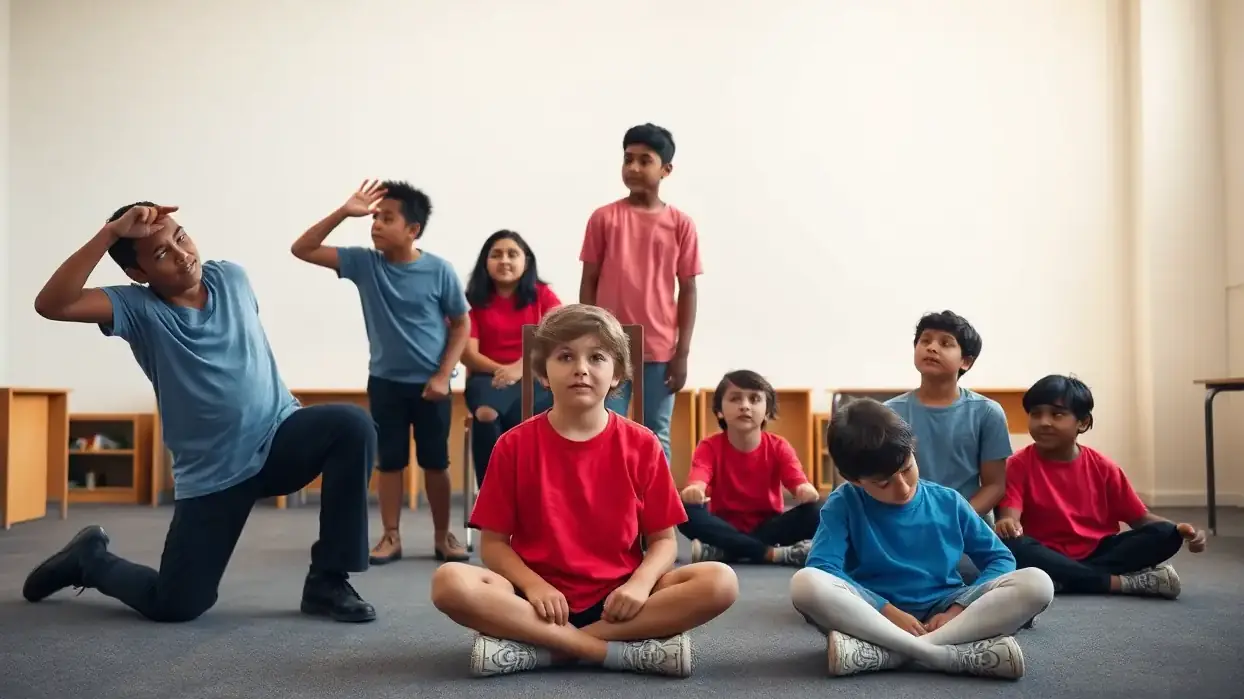
- Make three freeze frames: beginning, middle and end. Use high, middle and low levels.
- Make sure the most important character is where the audience looks first: at the front, higher, or with everyone facing them.
- Show your three frames with a clap between each. The audience says what story they saw.
- Add thought tracking: when tapped, each actor says one sentence their character is thinking.
How you'll know: The audience can tell your story back to you without you saying a word, apart from the thoughts.
Safety: No lifting or balancing on each other; keep freeze frames on the floor or on stable chairs.
Go further: Add a slow-motion movement between frames that shows how the characters got from one moment to the next.
Fits week 1 →Role on the wall and hot-seatingHow do you get inside someone else's head?Open
You need: large paper · felt pens · a chair for the hot seat
- Draw an outline of a person on large paper.
- Outside the outline, write facts others can see: age, clothes, job, how they walk and talk.
- Inside, write what they feel, what they want, and what they are afraid of.
- One person sits in the hot seat as the character. The group asks questions like 'What did you do this morning?' and 'What do you want most?'
- Add new ideas from the hot seat to the role on the wall.
How you'll know: Your character has a clear want and a clear worry, and you can stay in role for at least five questions.
Go further: Hot-seat a character who is the 'problem' in your play and find a reason they act the way they do.
Fits week 2 →Status cardsHow do people show who has power without saying it?Open
You need: a pack of playing cards (1–10) · two chairs and a table
- Each actor secretly draws a card: 1 is the lowest status, 10 is the highest.
- Improvise a short scene (a shop, a doctor's waiting room, a council meeting) and play your status through your body, eye contact, space and voice.
- The audience guesses each actor's number.
- Swap cards and play the same scene again. Talk about what changed.
How you'll know: The audience guesses status within two numbers, and you can name three ways you showed it.
Go further: Play a scene where status flips halfway through: the low-status character ends up in charge.
Fits week 2 →Issue investigationWhat is really going on with our issue, and who does it affect?Open
You need: interview questions · a device for photos or voice notes (with permission) · access to trusted websites or the library
- Write four open interview questions (who, what, when, how does it make you feel, what would help?).
- Interview one or two people the issue affects. Ask permission before recording and tell them how you'll use their words.
- Find two facts from a trusted source such as a council, DOC, NZ History or Stats NZ.
- Photograph or sketch the place where the issue happens.
- Highlight one real line, fact or image you want to put in your play.
How you'll know: You have an interview, two facts with sources, and a clear idea of who the issue affects.
Safety: Interview people you or your whānau know, or with a teacher present; stay together if visiting a site and keep away from roads and water.
Go further: Find out who has the power to change the issue and invite them to your performance.
Fits week 2 →Scene structure and transitionsHow do you join scenes so the audience stays hooked?Open
You need: a storyboard strip (six boxes) · sticky notes · a timer
- Write each scene on a sticky note: opening image, problem scenes, turning point, final image.
- Move the notes around until the order builds tension.
- Choose a transition between each pair of scenes: freeze, slow motion, a sound cue, a narrator line or a chorus movement.
- Run the play with a timer. Cut anything that repeats.
How you'll know: Your play runs 6–10 minutes, and every transition is planned and rehearsed.
Go further: Use your symbol (an object, colour or sound) at the start and end so it means something different the second time.
Fits week 3 →Torch lighting labHow does the direction and colour of light change how we feel about a character?Open
You need: 2–4 LED torches or LED work lamps · coloured cellophane (red, blue, yellow, green) · pegs or tape · a darkened room · a volunteer actor
- Darken the room. Light the actor's face from the front. Then from the side, from above and from below.
- Write one word for the mood each direction creates.
- Peg cellophane over the torch. Try each colour, then two torches with different colours from each side.
- Mix red, green and blue light on a white wall and see what colours appear where they overlap.
- Choose the lighting state for your opening and final image.
How you'll know: You can explain why you chose each lighting state and what it adds to the meaning.
Safety: Use LED lights only, which stay cool. Never put cellophane on halogen or incandescent bulbs. Keep cables taped down and walkways clear.
Go further: Use a sheet as a screen and make a shadow scene by lighting actors from behind.
Fits week 4 →Soundscape and cue sheetHow can sound tell the audience where they are and what to feel?Open
You need: voices, bodies and everyday objects · a phone or laptop with a speaker · a free sound effects library · cue sheet template
- Close your eyes and list the sounds of your setting (a busy road, a stream, a school at lunchtime).
- Create a live soundscape with voices, body percussion and objects. Record it if you like.
- Find one or two recorded effects from a free library and note where each came from.
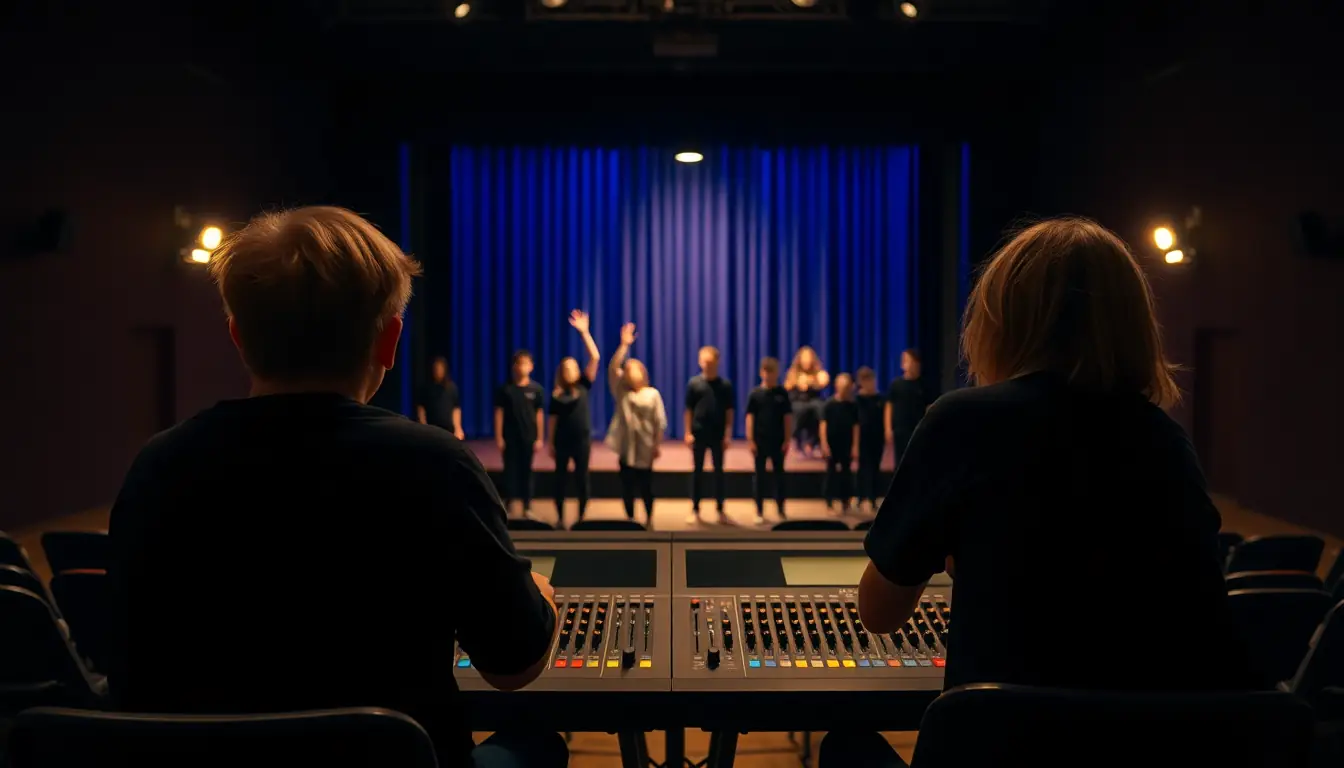
- Fill in a cue sheet: cue number, the moment on stage, the sound, the volume, and when it stops.
- Rehearse with the sound operator until cues land on time.
How you'll know: Every sound cue is written down, lands at the right moment, and adds to the story.
Safety: Keep volume comfortable and warn the audience before any sudden loud sound.
Go further: Use silence as a cue: plan one moment where all sound stops and see what it does to the audience.
Fits week 4 →Forum theatre runWhat happens when the audience can change the story?Open
You need: your rehearsed play · a 'joker' (host) · a clear space where audience members can step in
- Perform the whole play once without stopping.
- The joker explains the rules: in the replay, anyone can call 'stop!', take the place of the main character, and try a different choice.
- Replay the forum moment. When someone calls stop, they step in; the other actors respond truthfully in character.
- After each try, the joker asks the audience: did that work? What else could happen?
- Record the ideas the audience tried.
How you'll know: At least two audience members try a new choice, and you can list the solutions people suggested.
Go further: Take the best audience solution and write it up as a proposal for the person who can make the change.
Fits week 5 →Look closer
From the real world
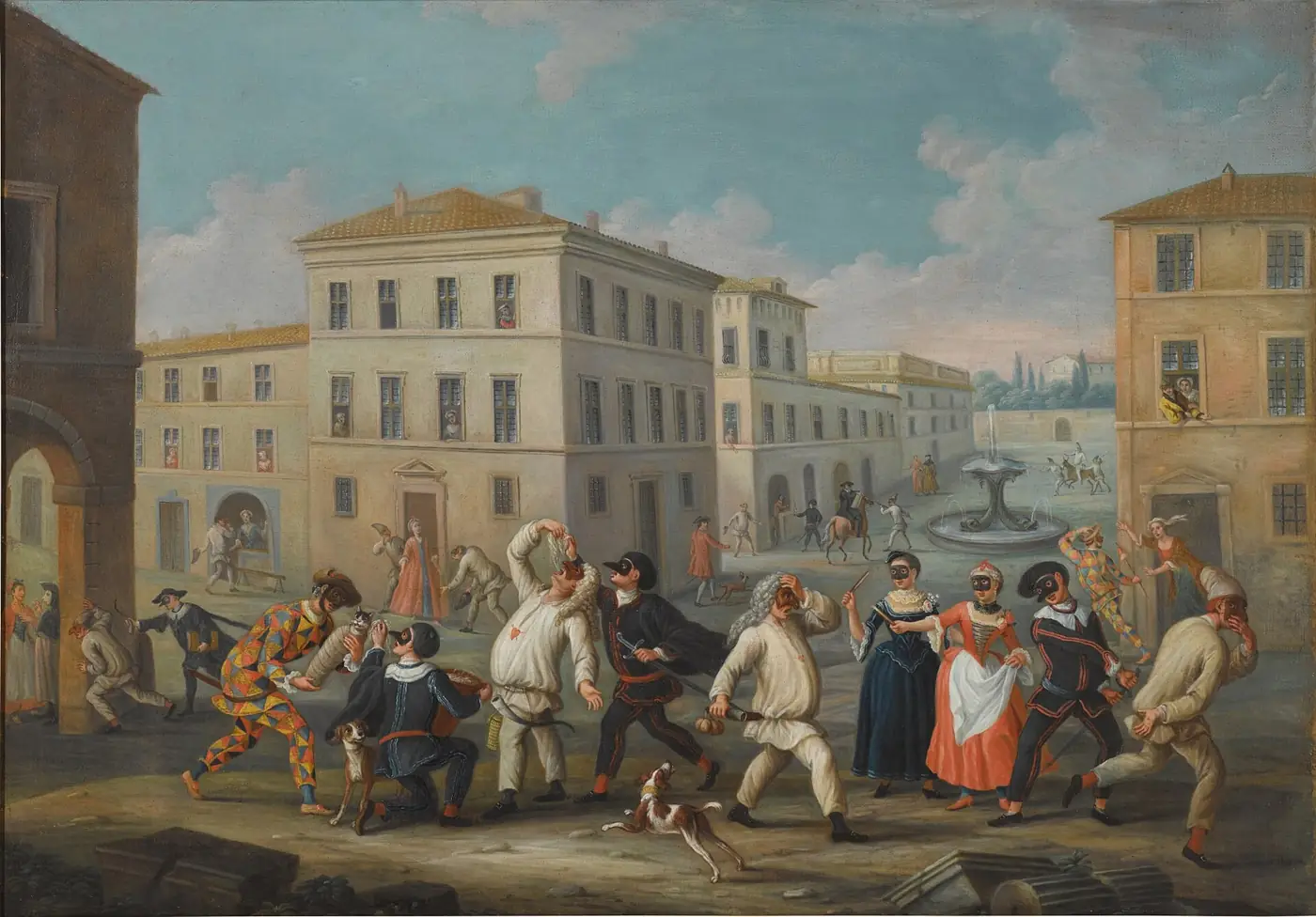
Background reading
Read to understand
Short readings written for Kōkiri Learn students, with their sources.
- The drama toolkit: techniques every actor usesThe elements of drama and the techniques you can use to build characters and scenes, from freeze frames to hot-seating.
- Theatre that speaks up: from Brecht to forum theatre to AotearoaHow playwrights and theatre companies around the world and in Aotearoa have used drama to raise issues and invite audiences to act.
- Light and sound: designing the world of the playHow lighting and sound designers create mood, show time and place, and guide the audience's attention, and how to do it safely at school.
Trusted NZ sites
Explore more
Placed at the stage of the journey where each one helps.
Connect
Māori theatre: te whare tapere hōu ↗Te Ara
From whare tapere entertainment to modern Māori theatre companies and marae theatre.
Respond
First Māori theatre companies, 1970–1990 ↗Te Ara
Te Ika a Maui Players and Maranga Mai: theatre that toured schools and marae to raise issues.
Respond
Pacific music and performing arts ↗Te Ara
Pacific theatre companies in Aotearoa and the stories they bring to the stage.
Experiment
Forum theatre ↗Wikipedia
How Augusto Boal's forum theatre works, step by step.
Arrange
Playmarket ↗Playmarket
New Zealand's playwrights' agency: find NZ plays and see how writers shape scenes.
Transform
Costume, lighting and sound design ↗Te Ara
How New Zealand theatre designers use light and sound to create mood.
Transform
Colours of light ↗Science Learning Hub
The science behind mixing coloured light for your lighting design.
Transform
BBC Sound Effects ↗BBC
Thousands of free sound effects for personal and school projects.
Exhibit
Taki Rua ↗Taki Rua Productions
A Māori theatre company that tours te reo Māori plays to schools, kura and marae.
Real audiences
- Whānau and other classes at a lunchtime or evening performance
- A principal, board member, local board or council member who has power over the issue, invited to watch and respond during the forum
- A community group working on the same issue, who could use the play at one of their events
Work with other schools
- Swap issues with a partner school: each class devises a short scene about the other school's issue, then share recordings and compare how each class understood it.
- Hold an online forum theatre session: one class performs live on a video call and the partner class calls 'stop' and suggests new choices.
- Build a shared cue-sheet and lighting-idea bank so classes in different schools can try each other's lighting states and soundscapes.
Stretch challenges
- Write a direct-address monologue for a character who is usually not heard in your issue, such as the river, a future grandchild or a bus driver.
- Research a New Zealand theatre company such as Taki Rua or Pacific Underground and present how they chose the stories they tell.
- Film a short trailer for your play (with everyone's permission) to invite the audience.
- Design a full costume plan where colour and shape show each character's status and personality.
New Zealand Curriculum
What this world covers
Mapped to the refreshed Phase 3 statements. The whole class covers both the Year 7 and Year 8 sequences over two years.
The Arts · Performing arts (dance and drama)
Creating devised drama in response to a theme; drama techniques for character depth; identifying and using performing arts technologies (lighting, sound, props, costume) with intent to enhance meaning
Year 7 sequence
The Arts · Performing arts (dance and drama)
Communicating a complex idea by manipulating aspects of performance; symbolism and abstraction; transitions that shape emotional flow; genre conventions such as direct address in political theatre
Year 8 sequence
English · Oral language
Speaking to an audience with purpose, adjusting voice, pace and body language; listening and responding to feedback
Year 7 sequence
Social Sciences · Civics and society
How people and groups raise issues and take action to influence decisions in their community
Year 8 sequence
Science · Physical Science
Mixing coloured light and how filters change the colour of light on stage
Year 7 sequence
For teachers: how to run it
Prep: clear a large space (hall, library or pushed-back classroom) and book the hall for weeks 4 and 5. Gather a few chairs, boxes, fabric lengths and simple props; 4–6 LED torches or LED work lights, coloured cellophane or lighting gel offcuts, pegs and clamps; a phone or laptop and a portable speaker for sound; and printed cue sheets. Keep a drama 'ground rules' poster up: listen, commit, take care of each other's bodies, 'freeze' means everyone stops. Safety: warm up bodies before physical work; no lifts or falls without teaching them; clear the floor of bags. Use only LED lights (they stay cool) and never put cellophane on halogen or incandescent lamps; only adults rig school stage lights or use ladders; tape down every cable. Keep sound levels comfortable and warn the audience about any sudden loud noises. Choosing issues: steer groups towards issues they can research and act on locally, and away from issues about identifiable people, students' private lives, or traumatic events; bullying and exclusion can be explored through invented characters, never real classmates. Keep a 'parking space' for anything a student raises that needs follow-up with you or the school's pastoral team. Tikanga and history: when teaching about Māori theatre, marae theatre and protest companies, use Te Ara's Māori theatre entry and, if possible, invite a local Māori or Pacific theatre practitioner (with koha). If a group devises from a local Māori history, go through the school's iwi relationships and do not stage karakia, haka or waiata casually as 'decoration'. Differentiation: every student can find a role as performer, director, lighting operator, sound operator, stage manager or front-of-house host; students who are anxious about speaking can play non-speaking roles, narrate from the side, or run tech. Confident students can write a direct-address monologue, joker (facilitate) the forum, or design a full lighting state for each scene. Assessment: use the diary, cue sheet, rehearsal footage (kept private) and reflection, not the polish of the final show. Pīwakawaka, the AI companion, only asks a question about a group's issue or scene; it never writes scripts. Kōkiri Lab links: social sciences worlds on civics and action pair well with the issue research in week 2.
Plan this world into any term with the two-year planner. Students can record their thinking in their Kōkiri Learn portfolio.
More Arts worlds

Ready to run it with your class?
Free trial for NZ schools. One combined Years 7–8 class, any term.