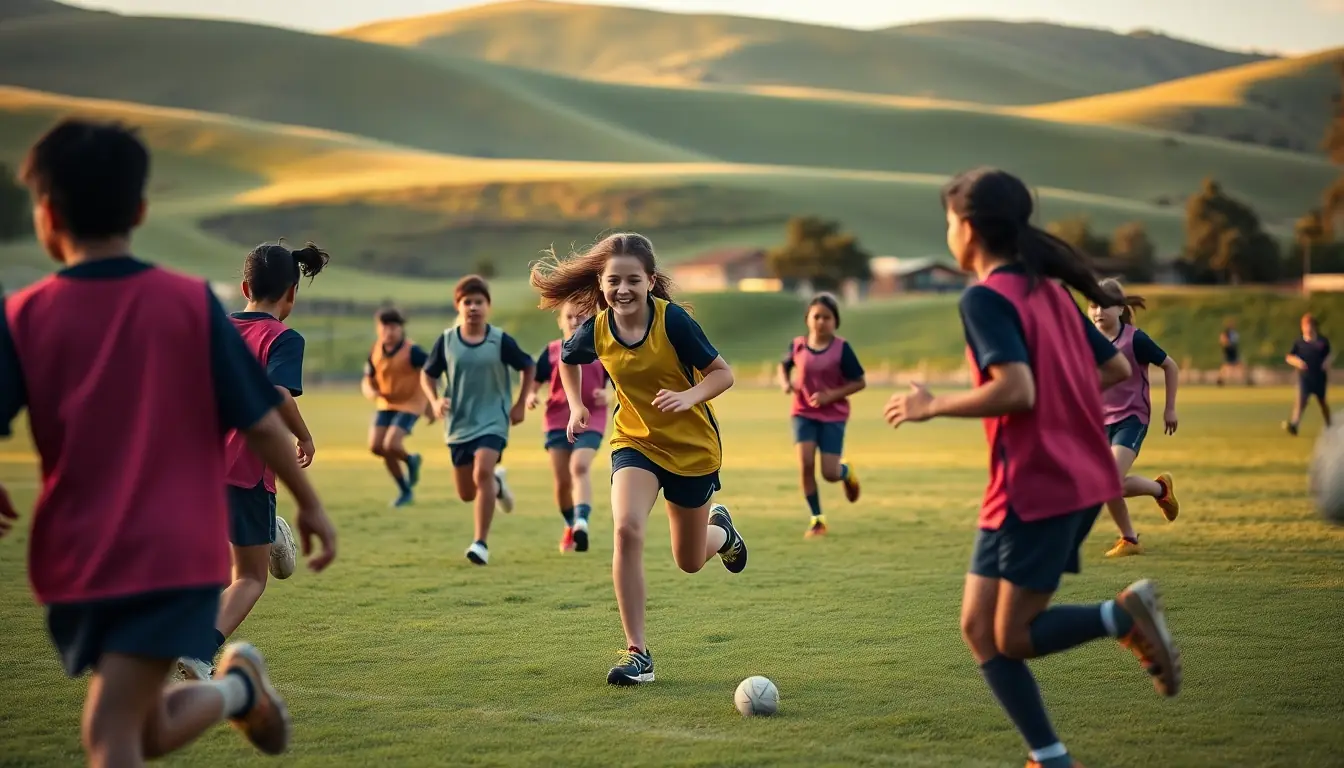
Health and Physical Education · World 6 of 8 · Years 7–8
Game On: Tactics, Teamwork and Fair Play
Find the space, read the play, make the call. Learn to think like a player, a coach and a referee, then run a games festival.
Big question: What makes a game fair, safe and fun for everyone, and how do good teams make smart decisions together?
- You'll make
- A 'Game On' festival pack: three class-designed or modified games (one invasion, one net, one striking and fielding) with rule cards, safety notes, a team-roles board and a simple stats sheet, run as a lunchtime festival for a younger class.
- For
- A younger class at your school, the lunchtime sports leaders, and whānau at a festival morning
- Time
- 5 weeks · 2 sessions a week
Your mission
Why it matters
Lunchtime games at your school keep ending in arguments: the same few kids get the ball, nobody agrees on the rules, and some people have stopped joining in. The syndicate has asked your class to fix it. You'll learn how games work, practise the tactics and roles that make teams click, and then run a lunchtime games festival that everyone wants to play in.
Games are one of the best ways to be active, make friends and feel part of something. Understanding tactics helps you enjoy games more, and knowing how to make rules fair and include everyone is a leadership skill you'll use on the field, in clubs and far beyond sport.
Your first step
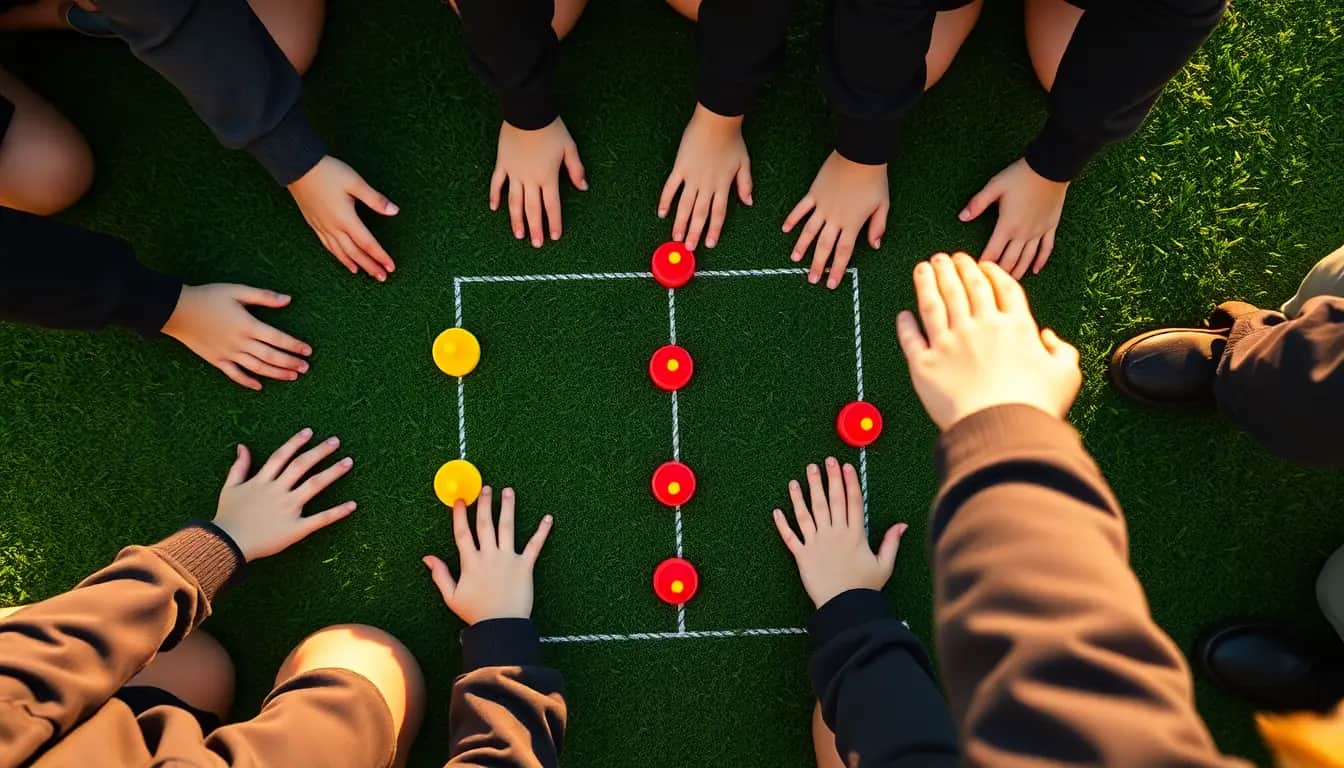
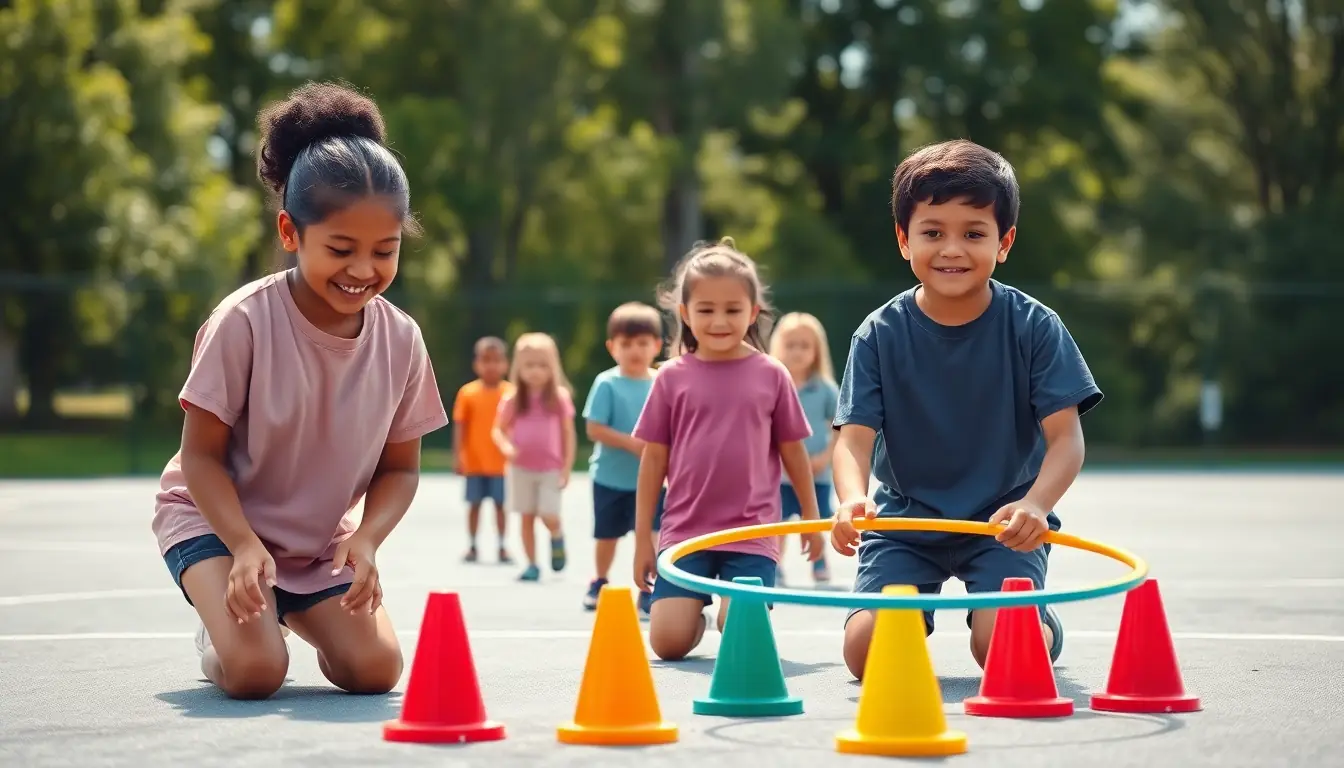
Play three minutes of 'ball tag' with no rules at all. Then stop and talk: what went wrong? What one rule would make it safer or fairer? Add it and play again.
Make it yours
Choose a context
Same big question, three different places to explore it. Pick the one that fits your class and community.
The school field and the court
Where most of your games happen. Look at the lunchtime games already played at your school, who plays, who doesn't, and why. Test your games in the real space you have, with the real equipment in the PE shed.
The local club and the park
A rugby league, netball, hockey, touch or cricket club near you, or the park where whānau play backyard cricket and touch on summer evenings. Interview a coach or club volunteer about how they keep games safe, fair and welcoming for young players.
Games from Aotearoa and the Pacific
Ngā tākaro Māori such as kī-o-rahi and tī rākau, Pacific games like kilikiti (Samoan cricket), and the games your whānau played growing up. Learn where games come from, how they have changed, and how to play them respectfully, ideally with someone from your community who knows them well.
THRIVE
Week by week
Two sessions a week, each with Getting started and Stretch support so the whole class works together.
- W1Tune in: what makes a game work?Tune In: Chaos ball · Tune In: Four families of games
- W2Warm-ups, habits and team rolesHabits: Warm up like a pro · Relationships: Teams and roles
- W3Tactics: finding space in invasion and net gamesImprove: Find the space · Improve: Aim for the gaps
- W4Striking and fielding, and games from AotearoaImprove: Hit it into the gaps · Value: Kī-o-rahi and ngā tākaro
- W5Run the festival and look backValue: Design the festival · Evaluate: Game On festival and review
Hands-on
Activities
Investigations and projects that fit the weeks above. Open one to see what you need and how you'll know it worked.
Four familiesHow are different games alike underneath?Open
You need: cards with the names or pictures of 20 sports and games · four hoops or mats labelled with game family pictures
- In small groups, deal out the cards.
- Place each card in a hoop: invasion (get into the other team's area to score), net and wall (send the ball where they can't return it), striking and fielding (hit the ball and run while others field), target (get closest or hit a target).
- Argue about any that could go in two places.
- For each family, write the main tactical problem: what do players have to decide?
How you'll know: You can sort games into families and explain the main decision players make in each one.
Go further: Invent a new game that mixes two families. What new tactics does it need?
Fits week 1 →Build your warm-upWhat should a good warm-up do for your body and mind?Open
You need: cones · a timer · warm-up planning cards
- Pulse raiser (3–4 minutes): gentle jogging, skipping or a tag game to raise your heart rate.
- Mobility (2–3 minutes): arm circles, hip circles, ankle rolls.
- Dynamic stretches (3–4 minutes): leg swings, walking lunges, high knees, heel flicks. Move while you stretch; no long holds.
- Game-specific drill (2–3 minutes): passing, dodging or catching like the game you're about to play.
- Mental rehearsal: close your eyes and picture one thing you'll do well.
- Take your pulse for 15 seconds before and after and multiply by four.
How you'll know: Your warm-up raises your pulse, moves every major joint and prepares you for the actual game, and you can explain why each part is there.
Safety: Start slowly. Stop if anything hurts; stretching should never be painful.
Go further: Design a warm-up for a very different sport, such as waka ama or swimming. What changes?
Fits week 2 →Team roles boardHow does sharing leadership make a team stronger?Open
You need: a role card for each role · a team board or poster · bibs
- Read the role cards: captain (leads the huddle, keeps spirits up), coach (watches and gives one tip), warm-up leader, umpire (knows the rules, makes calls), equipment manager, statistician (tallies team stats).
- Each person chooses or is given a role for the week.
- Before each game, every role does its 'before' job. After, each role reports one thing.
- Rotate roles each week so everyone leads at least twice.
How you'll know: Every member has a clear job, and your team runs a game without adults having to organise it.
Go further: Write a role card for a new job your team needs, such as 'inclusion checker' or 'hype crew'.
Fits week 2 →Keep-ball tacticsHow do you keep the ball when defenders are closing in?Open
You need: cones for 10 m by 10 m grids · a ball per grid · bibs · tally sheets
- Play 3 attackers v 1 defender in a grid. Attackers try to make 5 passes in a row.
- Coach's freeze: stop the game and look. Is the ball carrier alone? Where is the empty space?
- Try the tactic: after you pass, move into space so there's always a triangle.
- Make it harder: 4 v 2, a smaller grid, or no passing back to the person who passed to you.
- Statisticians tally completed passes and turnovers in each round.
How you'll know: Your team's completed passes go up when you use triangles and move after passing, and your tally shows it.
Safety: No contact. Defenders intercept or touch the ball only.
Go further: Add a goal line so attackers must also go forward. How does that change your choices?
Fits week 3 →Space invadersWhere should you send the ball in a net game?Open
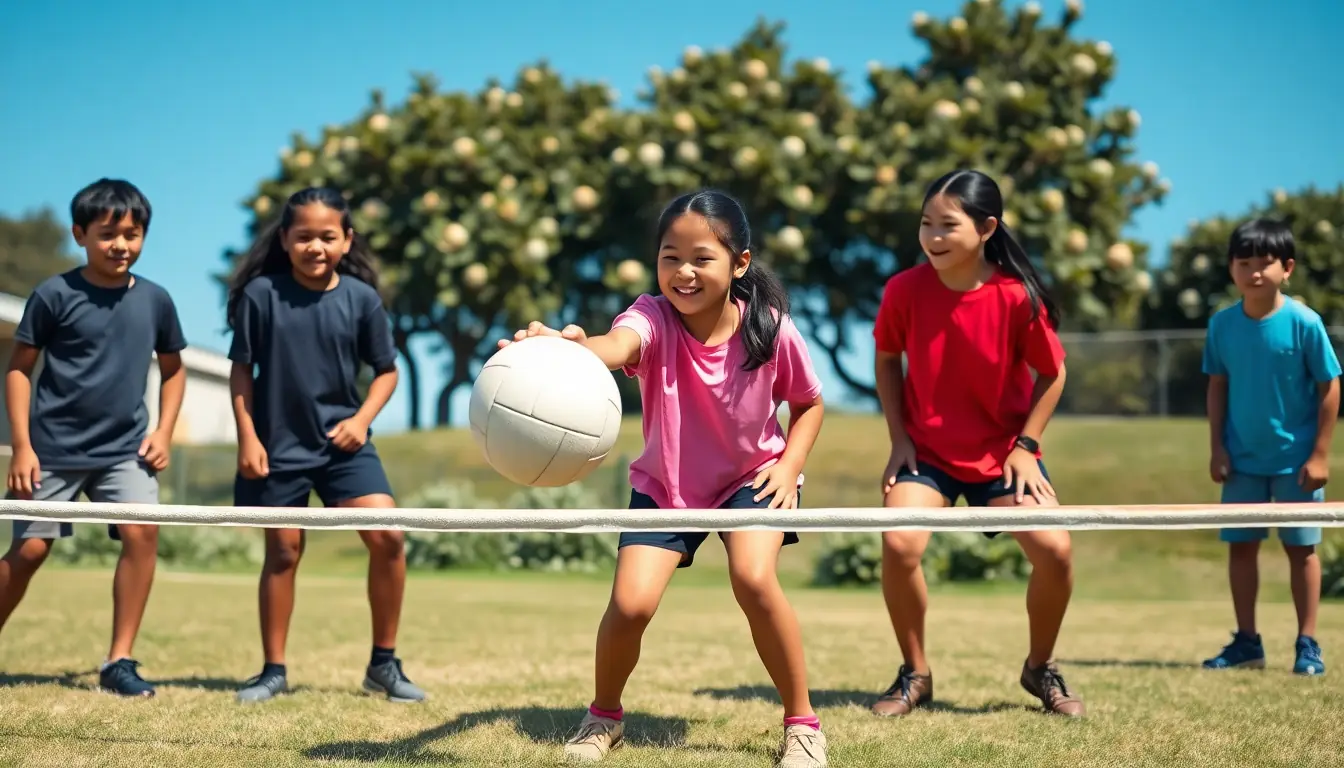
You need: a low net or rope between two chairs · a soft ball or volleyball · hoops
- Play in fours, two each side, with a catch-and-throw rule.
- Place hoops in the empty spaces on the other side. Landing in a hoop scores 2 points; landing in court scores 1.
- Defenders move the hoops after each point to wherever there's a gap.
- Afterwards, discuss: which spaces were easiest to attack (deep, short, sideline, between players)?
How you'll know: You look up before you send the ball and aim for spaces, not people.
Go further: Play with a volley (no catching) and see if you can still find the gaps.
Fits week 3 →Gap finderHow do batters and fielders use space in striking games?Open
You need: a soft ball · a bat or racket · a batting tee or cone · 8–10 cones
- Set out a fan of cones to make 'gates' in front of the batter.
- Batters score by hitting the ball through a gate on the ground.
- Fielders spread out and try to cover the gates. After three hits, fielders can move one cone.
- Switch roles. Fielders practise backing up: one fields, one gets behind them in case they miss.
How you'll know: You can explain where you aimed and why, and how fielders adjusted to close the gaps.
Safety: Batters stay in the batting zone; everyone else stays behind a safety line until the ball is hit. Only the batter swings the bat.
Go further: Keep a tally of which gates the ball went through. Where should fielders stand next time?
Fits week 4 →Tī rākau rhythmsWhat can a stick game teach about timing and teamwork?Open
You need: two short rolled-newspaper or dowel sticks per person · a steady beat (clapping or a drum)
- Kneel facing a partner, sticks upright on the ground in front of you.
- Learn a simple pattern: tap the ground, tap your own sticks together, then pass one stick to your partner's right hand on the beat.
- Add a second pass and try to keep the rhythm steady.
- Swap partners and teach them your pattern.
How you'll know: You and your partner keep a steady rhythm for eight beats without dropping a stick.
Safety: Soft or rolled-paper sticks; pass, don't throw, at this stage.
Go further: With a kaiako Māori or kapa haka tutor, learn how tī rākau is performed with a waiata, and why the rhythm and words matter.
Fits week 4 →Kī-o-rahi tasterHow is kī-o-rahi played, and what values does it carry?Open
You need: a round field marked with cones (an outer circle and an inner circle) · a central target (a tall cone or padded pole) · a soft kī (small round ball) · bibs · a kaiārahi or teacher who knows a local version
- Listen as your kaiārahi explains the version of kī-o-rahi you'll play and any tikanga to follow.
- Walk the field: find the outer boundary, the markers (pou) around it and the central target (tupu).
- Play a slow walk-through: one team scores by touching the pou and bringing the kī into the centre; the other scores by hitting the tupu. Rules vary between regions, so follow your kaiārahi.
- Play a full taster with 'touch' instead of tackles.
- Talk afterwards about teamwork, respect for the game, and how it compares with games you already know.
How you'll know: You can describe the field and the basic aim of kī-o-rahi and explain why it's important to learn it from someone who knows it.
Safety: Touch or tag only, no tackling. Soft ball. Keep clear of the central target when it's being thrown at.
Go further: Find out whether a kī-o-rahi competition or festival runs in your region and how schools take part.
Fits week 4 →Festival packHow can we make games that everyone wants to play?Open
You need: card for rule cards · coloured pens · stats sheet template · the equipment each game needs
- Choose one invasion, one net and one striking and fielding game.
- Write a rule card for each: how to score, five rules max, one safety rule, with pictures.
- Use STEP to make it inclusive: change the Space, the Task, the Equipment or the People.
- Add a stats sheet with one simple team stat for each game.
- Test each game with another team and fix anything confusing.
How you'll know: Another team can read your card and play the game without asking you questions, and nobody is left standing around.
Go further: Make a version of one game for players who use a wheelchair or who can't run, and test it.
Fits week 5 →Background reading
Read to understand
Short readings written for Kōkiri Learn students, with their sources.
- Reading the play: tactics in invasion, net and striking gamesMost games are really about space. Learn the four families of games and the smart decisions players make in each.
- Fair, safe and fun: rules, roles and including everyoneWhy rules exist, what an umpire really does, how shared roles make teams stronger, and how to change a game so everyone can play.
- Ngā tākaro: traditional Māori games and kī-o-rahiGames were an important part of life in traditional Māori society. Many are being played again today, including the team game kī-o-rahi.
Trusted NZ sites
Explore more
Placed at the stage of the journey where each one helps.
Tune In
Physical Literacy approach ↗Sport NZ
Why being active is about confidence, enjoyment and belonging, not just skill.
Tune In
Sport and society ↗Te Ara
How sport has shaped life in Aotearoa, for better and worse.
Habits
First aid for sprains and strains ↗KidsHealth
What to do if someone rolls an ankle during a game.
Habits
Concussion ↗Healthify
Why a knock to the head always means stopping and telling an adult.
Relationships
What helps young people stay in sport ↗Balance is Better (Sport NZ)
Fun, support and a say in the game keep young people playing.
Improve
Volleyball New Zealand ↗Volleyball NZ
Rules and ways into a fast net game.
Value
Traditional Māori games – ngā tākaro ↗Te Ara
The history of Māori games, from tī rākau to kī-o-rahi.
Value
Sport Integrity Commission ↗Te Kahu Raunui
Aotearoa's organisation for keeping sport fair, safe and free of cheating.
Evaluate
CensusAtSchool ↗CensusAtSchool NZ
Tools and ideas for graphing and making sense of your own data.
Real audiences
- A younger class who play your festival games
- The school's lunchtime sports leaders, who can keep the games running
- Whānau at a festival morning or school assembly
Work with other schools
- Swap rule cards with a class in another school, play each other's games, and send back feedback.
- Share team stats with a partner class and compare how tactics changed completed passes over five weeks.
- Hold a combined kī-o-rahi or games day with a nearby school or kura, organised with a local kaiārahi.
- Build a shared online games bank where each school adds its best inclusive game with a rule card.
Stretch challenges
- Learn the official hand signals for one sport and umpire a lunchtime game.
- Graph your team's stats over the unit (completed passes, turnovers) and write a coach's report on what changed.
- Interview someone who plays or coaches kī-o-rahi, kilikiti or another community game and share what you learn with the class.
- Design a 'fair play award' for the festival that rewards teamwork and respect, not winning.
New Zealand Curriculum
What this world covers
Mapped to the refreshed Phase 3 statements. The whole class covers both the Year 7 and Year 8 sequences over two years.
Health and Physical Education · PE: movement skills
Adhering to basic rules to keep games safe and fair; thorough warm-ups (pulse raiser, mobility, dynamic stretches) and mental rehearsal for readiness
Year 7 sequence
Health and Physical Education · PE: movement skills
Tactical decisions in invasion games such as hockey and netball: when to pass, shoot or dribble; finding space to keep possession and create chances in small-sided games; using basic statistics to set team goals
Year 7 sequence
Health and Physical Education · PE: movement skills
Rules, strategies and tactics in net and wall and touch/rippa rugby games; officiating small-sided games; observation and data (completed passes, successful dodges) to reflect on strengths
Year 8 sequence
Health and Physical Education · Health: relationships
Decision-making and empathy in teams; role models; noticing and responding to exclusion and unfair treatment
Year 7 sequence
Mathematics and Statistics · Statistics
Planning data collection for a statistical question and choosing suitable graphs for game statistics
Year 7 sequence
For teachers: how to run it
Prep: check the field and court for hazards (holes, glass, wet surfaces), set clear boundaries with cones, and plan water breaks and shade. Have a first aid kit and a plan for knocks to the head: any suspected concussion means the student stops, does not return that day, and whānau are told (see Healthify's concussion page). Use soft or modified balls and non-contact versions (touch, rippa, bibs for tagging); no tackling. Game structure: this world follows a 'teaching games for understanding' approach, playing small-sided games first and pulling out skills and tactics as they're needed, and a Sport Education model where students hold roles (captain, coach, warm-up leader, umpire, equipment manager, statistician) for the whole unit. Keep teams stable and mixed by you, never picked by captains in front of others. Kī-o-rahi and ngā tākaro Māori: these are taonga. Rules and stories vary between iwi and regions, so invite a local kaiārahi (facilitator), kapa haka tutor or whānau member through the school's iwi relationships to lead the kī-o-rahi session, and follow their tikanga (for example, a mihi or karakia before play). If that isn't possible, frame the session as a 'taster' of one regional version, say so openly, and point students to Te Ara's Traditional Māori games entry. Do not invent a pūrākau (story) for the game. Differentiation: use the STEP tool (Space, Task, Equipment, People) to adapt every game: bigger balls, bigger zones, a 'no-defender' channel, more players on one side. Students who can't play (injury, disability, choice on a given day) take umpire, coach or statistician roles with full responsibility. Data: stats track the team (completed passes, turnovers), never compare individual students publicly. Kererū, the AI companion, asks one question about your team's tactic plan; it never picks tactics or scores games. Links: Mathematics world on statistics (graphing game data); Kōkiri Lab leadership pathway for students who go on to run lunchtime sport.
Plan this world into any term with the two-year planner. Students can record their thinking in their Kōkiri Learn portfolio.
More Health and Physical Education worlds
Ready to run it with your class?
Free trial for NZ schools. One combined Years 7–8 class, any term.