Science · Inquiry B · Years 7–8
Te Pūnaha Hauropi: Investigating Ecosystem Change
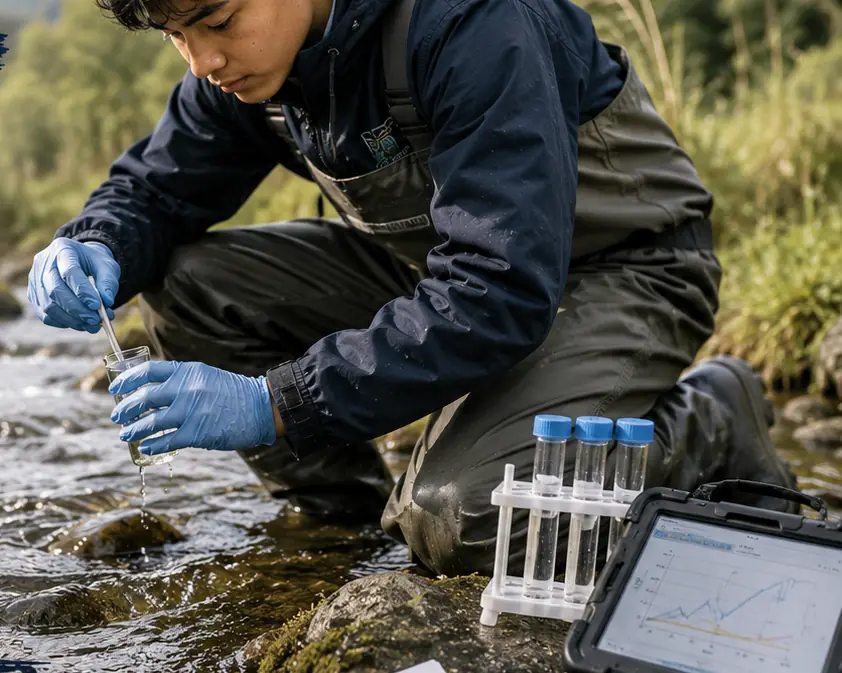
A local stream, wetland, or bush patch shows signs of change — fewer native species, new weeds, or altered water flow. A conservation group or council wants student-collected evidence before acting.
Your mission
Why it matters
Ecosystem change has many causes. Here you design your own methods and judge how confident you can be from the evidence you gather.
- You'll make
- A multi-causal scientific explanation with limitations stated, shared with a local conservation partner or council report.
- Who it's for
- Local conservation group or council environmental report
- How long
- About 5 weeks, in any term
- Who takes part
- The whole Years 7–8 class, together
Your first step
Choose one ecosystem indicator (e.g. macroinvertebrates, plant cover, water clarity). Draft a testable question and list two variables you must control.
Your journey: VOICE
- Validate the Problem
- Observe
- Investigate
- Create Conclusions
- Evaluate
Every stage has Getting started, On track and Stretch support, so the whole class can work on it together.
Explore more
Trusted New Zealand sites for your research.
- Science Learning Hub ↗
University of Waikato
NZ science articles, videos and activities, many set in Aotearoa.
- Citizen science projects ↗
Science Learning Hub
Real NZ projects your class can contribute data to.
For teachers: how to run it
Connect with a local environmental contact for authenticity. Emphasise sample size and repeated measures. Use peer critique before final conclusions.
Run it with a combined Years 7–8 class in any term. Students record each stage in Kōkiri Learn; you see progress by stage, never rankings or scores.
Ready to run it with your class?
Free trial for NZ schools. One combined Years 7–8 class, any term.