Science · Inquiry A · Years 7–8
Ngā Tohu o te Taiao: Signs in Our Environment
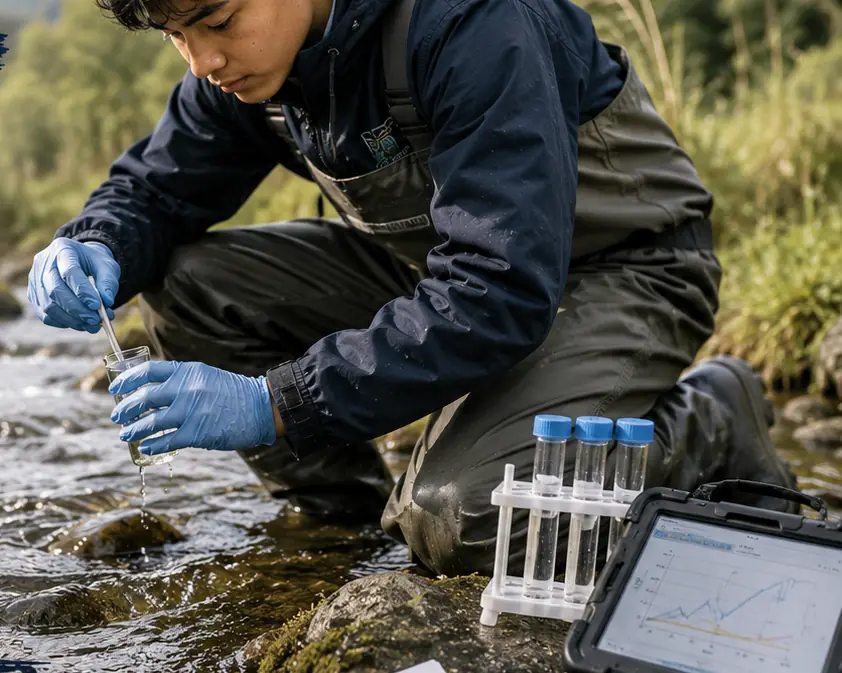
Something in your school grounds or local area has caught your attention — plants struggling, water that looks different, or wildlife behaving unusually. Your class needs evidence before anyone decides what to do.
Your mission
Why it matters
Scientists do not guess from one look. They gather trustworthy observations over time so decisions are based on evidence, not opinion.
- You'll make
- An evidence-based explanation (claim + data + reasoning) for a class science hui or environmental display.
- Who it's for
- Class science hui or school environmental display
- How long
- About 4 weeks, in any term
- Who takes part
- The whole Years 7–8 class, together
Your first step
Walk your chosen place once. Write three things you notice, one thing you wonder, and what you would need to measure to test your wonder.
Your journey: VOICE
- Validate the Problem
- Observe
- Investigate
- Create Conclusions
- Evaluate
Every stage has Getting started, On track and Stretch support, so the whole class can work on it together.
Explore more
Trusted New Zealand sites for your research.
- Science Learning Hub ↗
University of Waikato
NZ science articles, videos and activities, many set in Aotearoa.
- Citizen science projects ↗
Science Learning Hub
Real NZ projects your class can contribute data to.
For teachers: how to run it
Run a 10-minute place walk in week 1. Pair students for observation protocols. Conference on fair-test design before phase 3. Schedule a short hui for final explanations.
Run it with a combined Years 7–8 class in any term. Students record each stage in Kōkiri Learn; you see progress by stage, never rankings or scores.
Ready to run it with your class?
Free trial for NZ schools. One combined Years 7–8 class, any term.